Confirm the parts before installation
Check that the pulley hub and bushing designation belong together and that the bushing bore matches the shaft. Do not install a visually similar bushing simply because it enters the hub.
Clean the interfaces
Follow the actual bushing manufacturer’s instructions for surface condition and fastener preparation. Generic lubrication advice can be wrong for a particular locking system, so the released instructions control.
Check the key and shaft
Inspect the shaft and keyway for damage, burrs and wear. A new pulley will not correct a damaged shaft interface.
Set axial position and alignment
Before final tightening, confirm pulley position relative to the mating pulley and belt path. Misalignment can shorten belt life even when the pulley itself is correct.
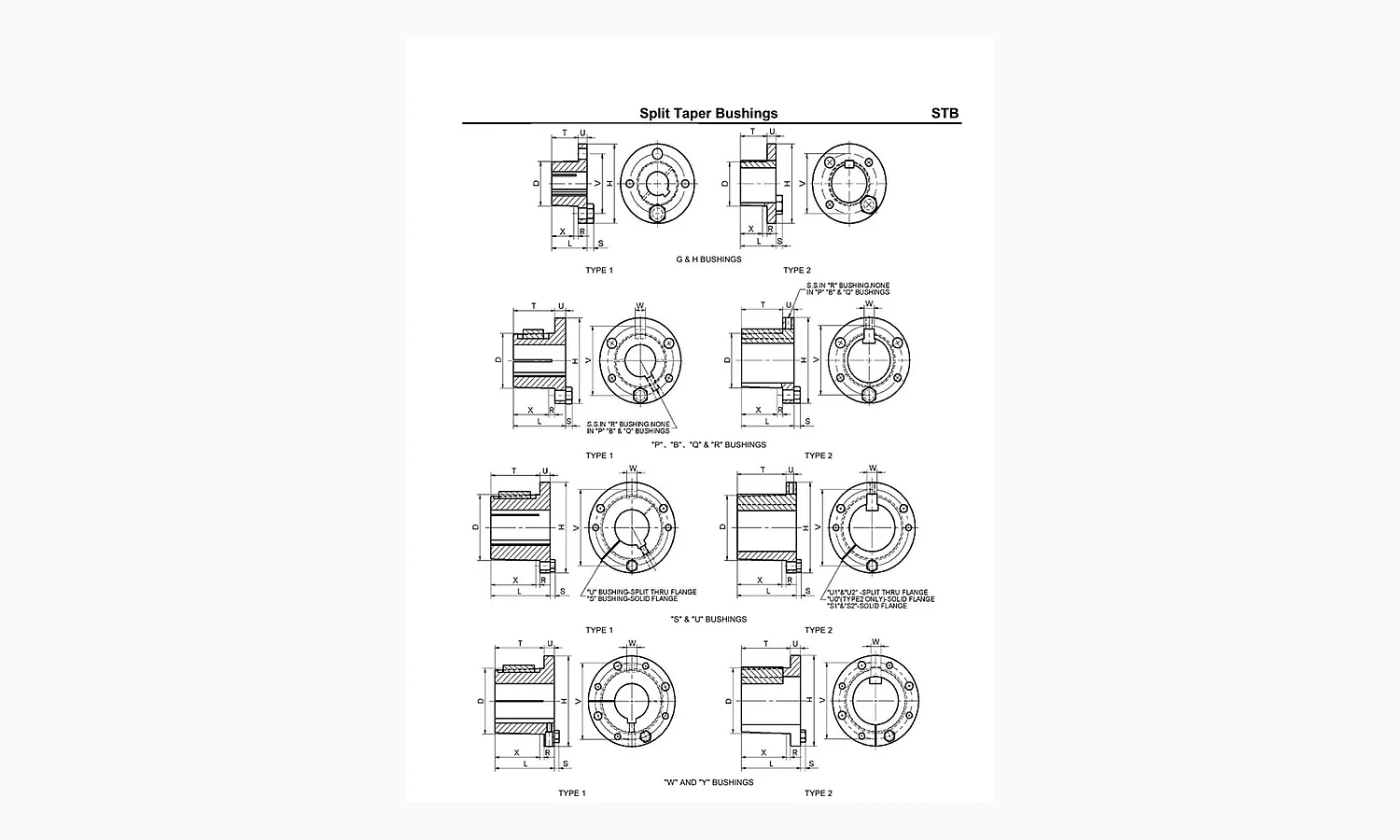
Tighten using the specified sequence
Use the actual bushing instructions for screw positions, torque and tightening sequence. This site does not publish a generic torque value because those values depend on the bushing size and system.
Recheck after commissioning
After the drive has run under controlled conditions, inspect belt tracking, guard clearance and any signs of movement. Follow the machine and belt supplier maintenance procedure for further checks.