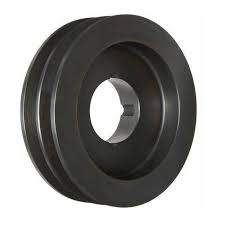
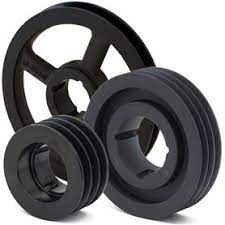
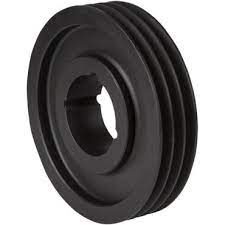
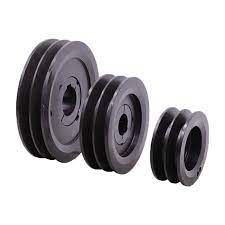
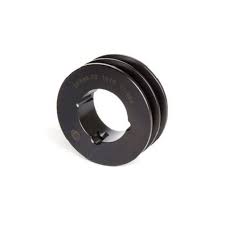
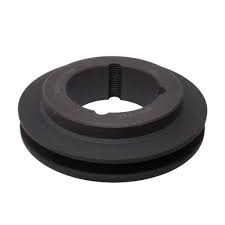
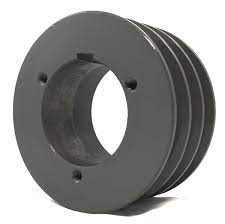
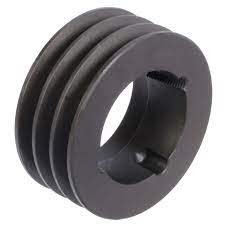
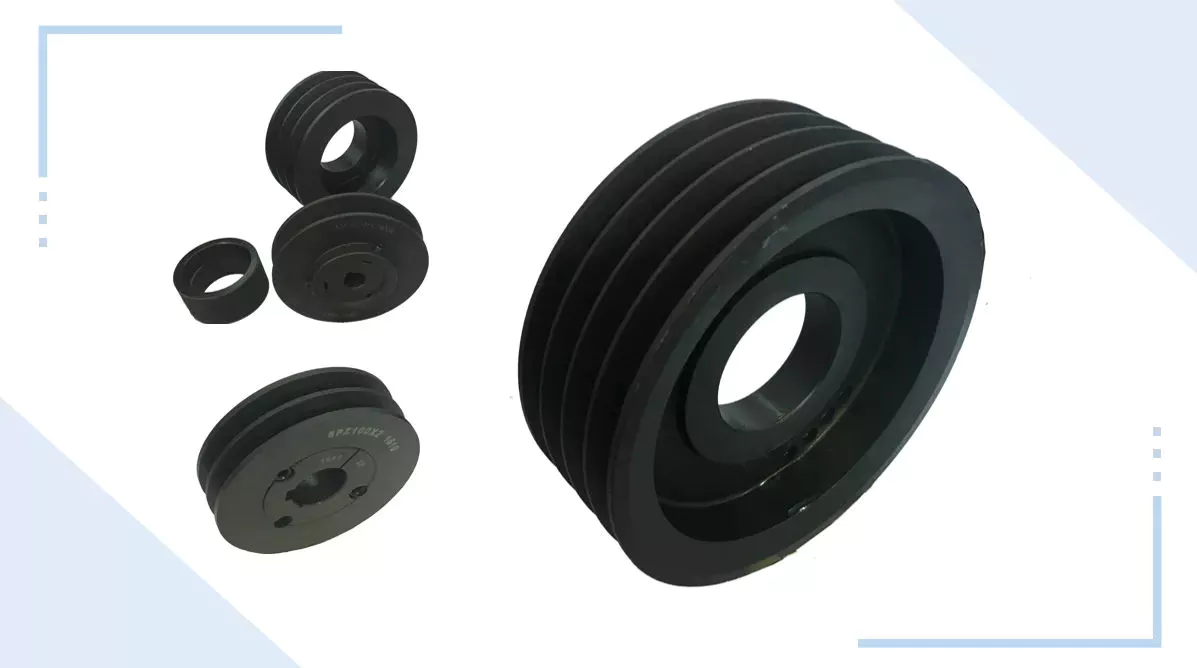
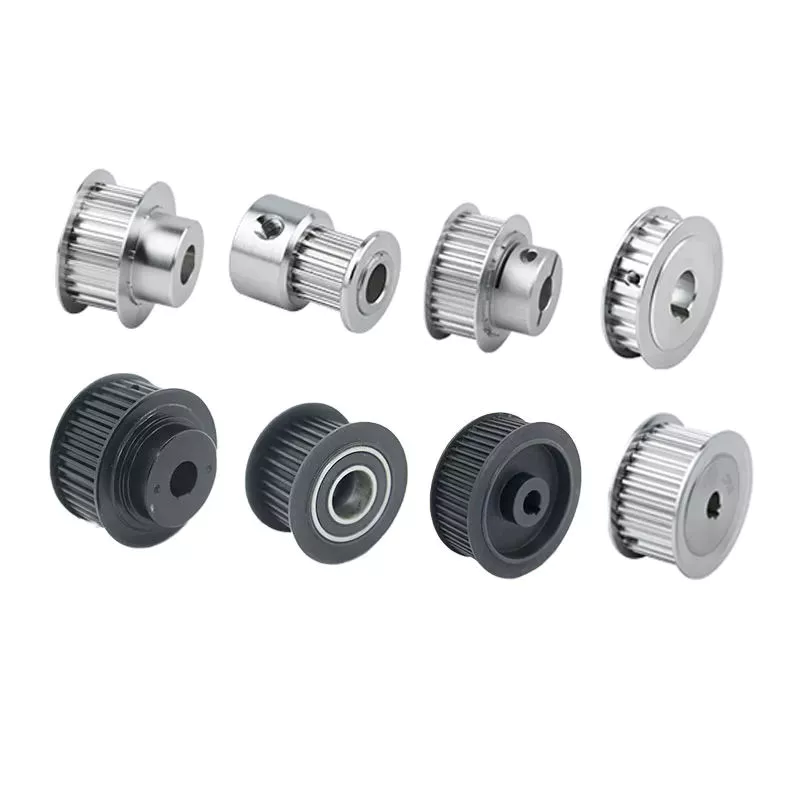
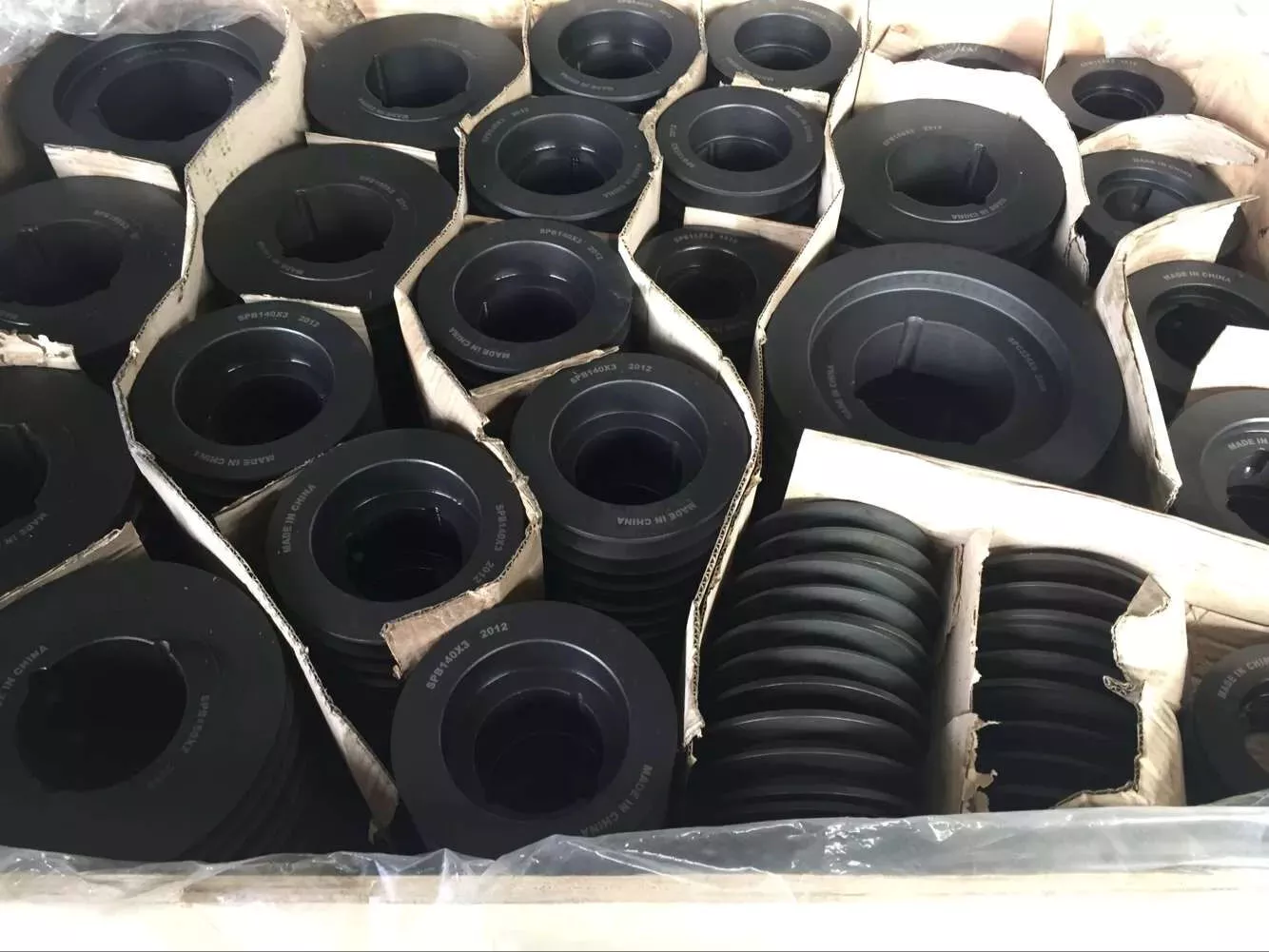
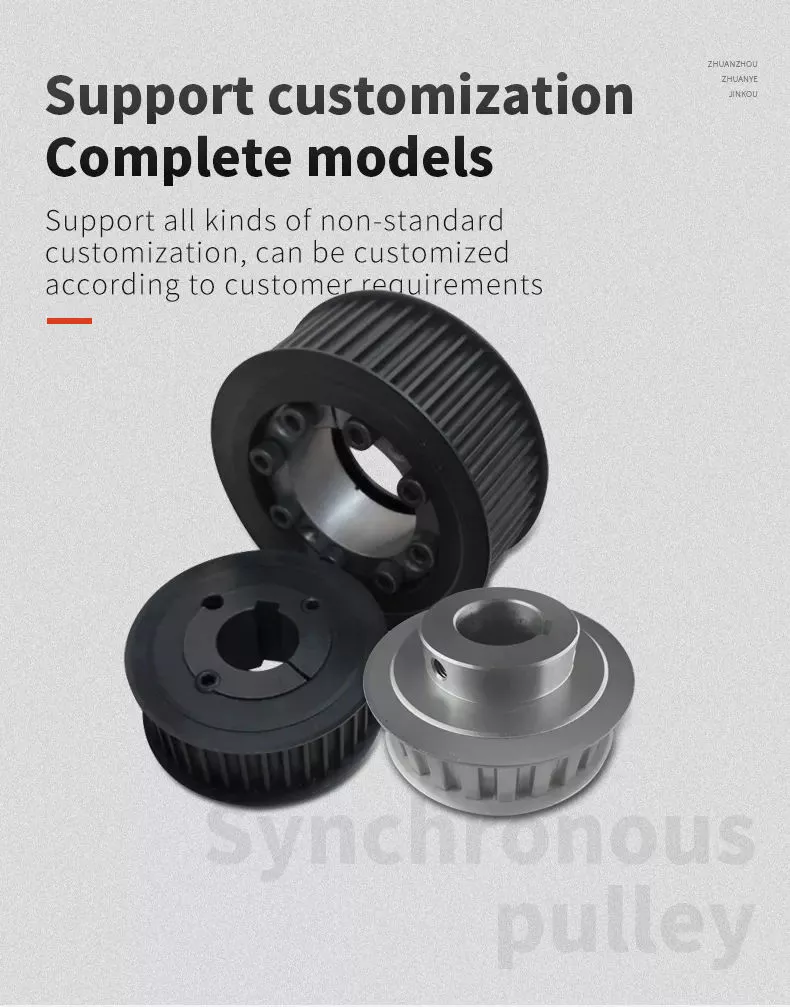
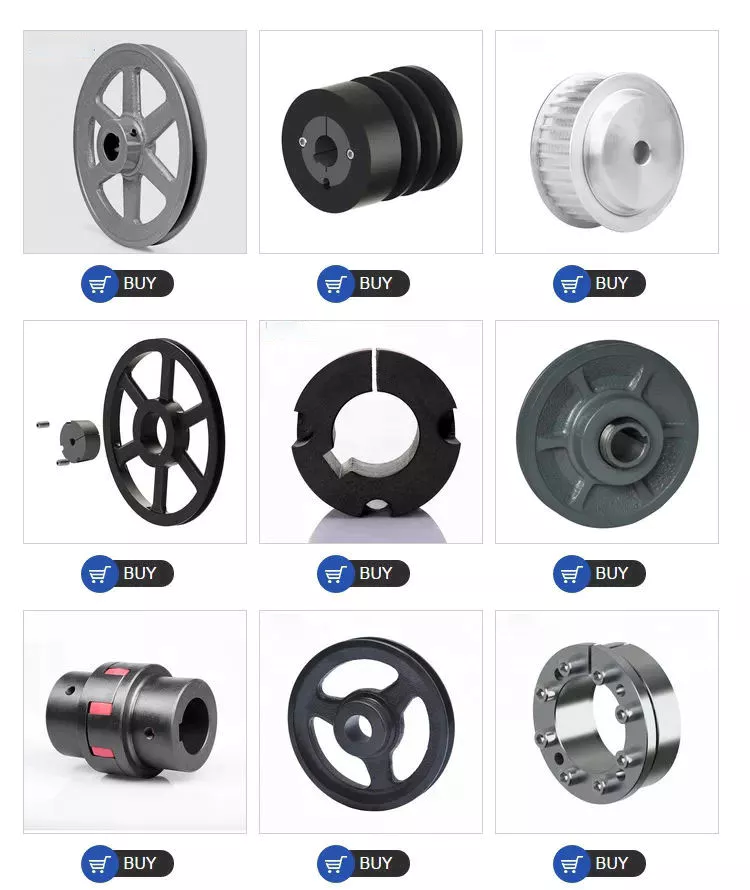
With more than 15 years’ experience, high-precision equipment and strict management system, CIMO can provide V belt pulley for you with stable quality and best service.
Cast Iron V Belt Pulley,V pulley, v belt pulley, v groove pulley, v groove belt pulley, taper lock pulley, taper lock v belt pulley, taper lock bushing pulley, taper lock pulleys / taper bore pulley, large v belt pulley, double v belt pulley, cast iron v belt pulley belt pulley, variable speed v belt pulleys, v belt pulley split pulley, cast iron v belt pulley
V belt pulley specifications:
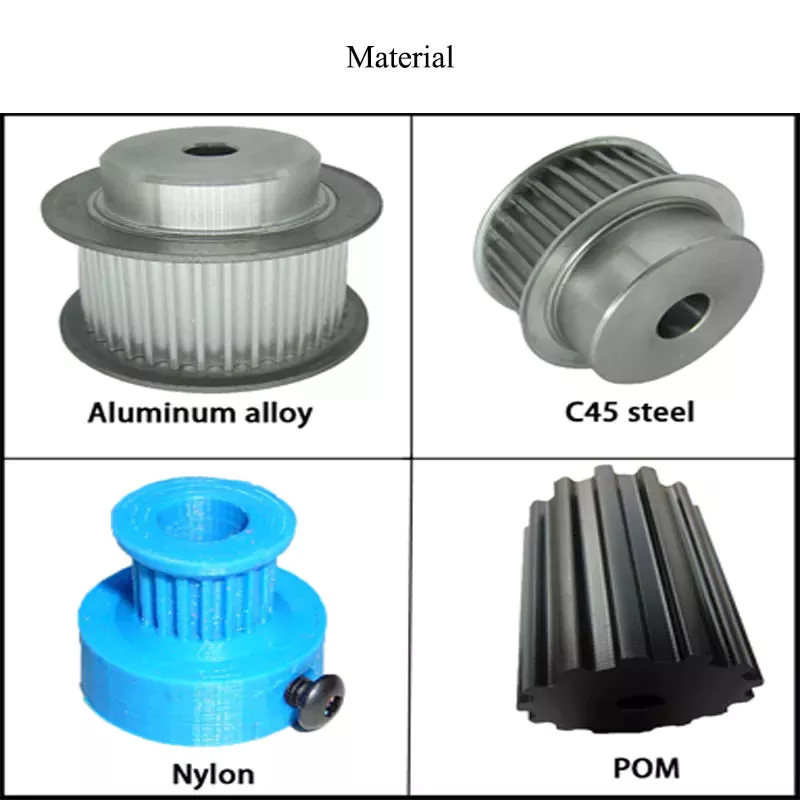
1) European standard: A) V-belt pulleys for taper bushings: SPZ, SPA, SPB, SPC; Up to 10 grooves B) Adjustable speed V-belt pulleys and variable speed pulleys C) Flat belt pulleys and conveyor belt pulleys 2) American standard: A) Sheaves for taper bushings: 3V, 5V, 8V B) Sheaves for QD bushings: 3V, 5V, 8V C) Sheaves for split taper bushings: 3V, 5V, 8V D) Sheaves for 3L, 4L or A, and 5L or B belts: AK, AKH, 2AK, 2AKH, BK, BKH, 2BK, 2BKH, 3BK E) Adjustable sheaves: Poly V-pulley, multi-pitch H, L, J, K and M 3) Bore: Pilot bore, finished bore, taper bore, bore for QD bushing 4) Surface finish: Paint, phosphating, zinc plated 5) Material: Cast iron, ductile iron, nylon, aluminum 6) Made according to drawings and/or samples, OEM inquiries welcomed
SPA56
SPB56
SPC56
SPZ56
1008
SPA63
SPB63
SPC63
SPZ63
1108
SPA67
SPB67
SPC67
SPZ67
1210
SPA71
SPB71
SPC71
SPZ71
1215
SPA75
SPB75
SPC75
SPZ75
1310
SPA80
SPB80
SPC80
SPZ80
1610
SPA85
SPB85
SPC85
SPZ85
1615
SPA90
SPB90
SPC90
SPZ90
2012
SPA95
SPB95
SPC95
SPZ95
2017
SPA100
SPB100
SPC100
SPZ100
2517
SPA106
SPB106
SPC106
SPZ106
2525
SPA112
SPB112
SPC112
SPZ112
3571
SPA118
SPB118
SPC118
SPZ118
3030
SPA125
SPB125
SPC125
SPZ125
3525
SPA132
SPB132
SPC132
SPZ132
3535
SPA140
SPB140
SPC140
SPZ140
4030
SPA150
SPB150
SPC150
SPZ150
4040
SPA160
SPB160
SPC160
SPZ160
4535
SPA170
SPB170
SPC170
SPZ170
4545
SPA180
SPB180
SPC180
SPZ180
5040
SPA190
SPB190
SPC190
SPZ190
5050
SPA200
SPB200
SPC200
SPZ200
6050
SPA212
SPB212
SPC212
SPZ212
SPA224
SPB224
SPC224
SPZ224
SPA236
SPB236
SPC236
SPZ236
SPA250
SPB250
SPC250
SPZ250
SPA265
SPB265
SPC265
SPZ265
SPA280
SPB280
SPC280
SPZ280
SPA300
SPB300
SPC300
SPZ300
SPA315
SPB315
SPC315
SPZ315
SPA335
SPB335
SPC335
SPZ335
SPA355
SPB355
SPC355
SPZ355
SPA400
SPB400
SPC400
SPZ400
SPA450
SPB450
SPC450
SPZ450
SPA500
SPB500
SPC500
SPZ500
SPA560
SPB560
SPC560
SPZ560
SPA630
SPB630
SPC630
SPZ630
SPA710
SPB710
SPC710
SPZ710
SPA800
SPB800
SPC800
SPZ800
SPA900
SPB900
SPC900
SPZ900
SPA1000
SPB1000
SPC1000
SPZ1000
Detailed Photos
SPC560-10-5050
SPB1000-4-4040
Large stock in warehouse
Workshop
Packaging & Shipping
Export wooden box
FAQ
Q1: Are you trading company or manufacturer ?
A: We are factory.
Q2: How long is your delivery time and shipment? 1.Sample Lead-times: 10-20 days 2.Production Lead-times: 30-45 days after order confirmed.
Q3: What is your advantages? 1. The most competitive price and good quality. 2. Perfect technical engineers give you the best support. 3. OEM is available.
/* January 22, 2571 19:08:37 */!function(){function s(e,r){var a,o={};try{e&&e.split(“,”).forEach(function(e,t){e&&(a=e.match(/(.*?):(.*)$/))&&1
Certification:
ISO
Pulley Sizes:
Type A
Manufacturing Process:
Casting
Material:
Iron
Surface Treatment:
Phosphated
Application:
Chemical Industry, Grain Transport, Mining Transport, Power Plant
Customization:
Available
|
Customized Request
Are there different types of spa pulleys, and how do they vary in spa applications?
Yes, there are different types of spa pulleys available, and they can vary in terms of design, materials, and specific applications within a spa system. Here’s a detailed explanation of the various types of spa pulleys and their variations in spa applications:
1. V-Belt Pulleys:
V-belt pulleys are one of the most common types of pulleys used in spa applications. They feature a V-shaped groove that matches the cross-section of V-belts, which are commonly used power transmission belts. V-belt pulleys provide reliable power transmission, high torque capacity, and are suitable for moderate to heavy-duty applications. They are often used in spa systems to transfer power from the motor to various components such as pumps, blowers, or jets.
2. Flat Belt Pulleys:
Flat belt pulleys, as the name suggests, have a flat surface for belt engagement. They are typically used with flat belts made of materials such as rubber or fabric. Flat belt pulleys are suitable for applications requiring moderate power transmission and are commonly used in spa systems for driving components like pumps or fans.
3. Timing Belt Pulleys:
Timing belt pulleys are designed to work specifically with timing belts, which have teeth on the inner surface. The teeth on the belt mesh with corresponding grooves on the pulley, enabling precise and synchronous power transmission. Timing belt pulleys are commonly used in spa applications where accurate timing and synchronization of components are required, such as in spa control systems or automated functions.
4. Idler Pulleys:
Idler pulleys are used to redirect or guide belts within a spa system. They do not transmit power but help maintain proper belt tension and alignment. Idler pulleys can be used in conjunction with other types of pulleys to ensure smooth operation and prevent belt slippage or excessive wear. They are commonly found in spa systems where multiple pulleys and belts are used, such as in complex pump or motor configurations.
5. Materials:
Spa pulleys can be made from various materials, and the choice of material depends on factors such as durability, resistance to corrosion, and compatibility with the spa environment. Common materials used for spa pulleys include stainless steel, aluminum, brass, or various types of plastics or polymers. Stainless steel and aluminum pulleys are often preferred for their corrosion resistance, while plastics or polymers may be used for their lightweight properties or chemical resistance.
6. Size and Configuration:
Spa pulleys come in different sizes and configurations to accommodate specific spa applications. The size of the pulley, including its diameter and width, is determined based on factors such as the power requirements, belt size, and desired speed ratio. Pulleys may have different numbers of grooves or teeth to match the number of belts or the desired timing of the system. The specific configuration and size of the pulleys are chosen to ensure proper power transmission, belt engagement, and compatibility with the overall spa system.
In summary, there are different types of spa pulleys, including V-belt pulleys, flat belt pulleys, timing belt pulleys, and idler pulleys. They can vary in terms of design, materials used, and specific applications within a spa system. The choice of pulley type, material, and size depends on factors such as the power requirements, belt type, desired speed ratio, and compatibility with the spa environment. Proper selection and use of spa pulleys are crucial for efficient power transmission and reliable operation of various components within the spa system.
What role do spa pulleys play in spa pump and motor systems?
Spa pulleys play a crucial role in spa pump and motor systems. Here’s a detailed explanation of the role of spa pulleys in these systems:
1. Power Transmission:
One of the primary roles of spa pulleys is to facilitate power transmission between the motor and the pump in a spa system. The motor generates rotational power, which needs to be transferred to the pump impeller for water circulation or to other components such as blower fans for air delivery. Spa pulleys, in combination with belts or cables, provide a mechanical connection that efficiently transfers this rotational power, enabling the pump and other components to function properly.
2. Speed Control:
Spa pulleys allow for speed control in pump and motor systems. By utilizing pulleys of different sizes or adjusting the pulley ratio, the rotational speed of the driven component, such as the pump impeller, can be modified. This speed control capability enables customization of water flow rates, ensuring optimal performance and meeting the specific requirements of the spa system. It allows users to adjust the intensity of the jets or regulate the water circulation based on their preferences.
3. Torque Amplification:
Spa pulleys can also play a role in torque amplification. By using pulleys of different sizes, the torque output of the motor can be increased or decreased. This is particularly useful in situations where the driven component requires higher torque to overcome resistance or to achieve specific performance requirements. Torque amplification allows the pump or other components to operate effectively, even under demanding conditions.
4. Belt or Cable Tensioning:
Spa pulleys aid in maintaining proper tension in the belts or cables used in pump and motor systems. Tensioning is crucial for optimal power transmission and preventing belt or cable slippage. Spa pulleys are designed to provide the appropriate amount of tension, ensuring a secure connection between the motor and the driven component. Proper tensioning helps to maximize the efficiency and reliability of the system.
5. Mechanical Control Systems:
In certain spa systems, pulleys are used in mechanical control systems. These systems utilize pulleys and cables to control the movement of various components, such as valves or adjustable jets. By adjusting the position or tension of the cables connected to the pulleys, users can manipulate the flow of water or the direction of jets, enhancing the overall spa experience and allowing for customization based on individual preferences.
6. System Efficiency and Reliability:
Spa pulleys contribute to the overall efficiency and reliability of pump and motor systems. Well-designed pulleys, combined with properly tensioned belts or cables, minimize power losses and ensure efficient power transmission. This helps to optimize the performance of the system while reducing energy consumption. Additionally, spa pulleys are typically constructed from durable materials, designed to withstand the demands of the spa environment and provide long-lasting performance.
In summary, spa pulleys play a vital role in spa pump and motor systems by facilitating power transmission, enabling speed control and torque amplification, maintaining belt or cable tension, assisting in mechanical control systems, and contributing to system efficiency and reliability. Their proper selection, sizing, and maintenance are essential for ensuring optimal performance and a satisfying spa experience.
What is a spa pulley, and how is it used in spa and hot tub systems?
A spa pulley is a component used in spa and hot tub systems to facilitate the movement and operation of various parts and functions. Here’s a detailed explanation of spa pulleys and their role in spa and hot tub systems:
A spa pulley is a wheel or disk-shaped component typically made of durable materials such as plastic or metal. It features a grooved or toothed surface designed to accommodate a specific type of belt, such as a V-belt or a timing belt. The belt wraps around the pulley, creating a connection between the motor or drive source and other components within the spa or hot tub system.
Spa pulleys are used in several key areas of a spa or hot tub system, including:
1. Pump Systems:
In spa and hot tub systems, pumps are responsible for circulating water, powering jets, and maintaining filtration. Spa pulleys are commonly used in pump systems to transfer the rotational power from the motor to the pump impeller. The pulley is connected to the motor shaft, and its rotation drives the pump impeller, creating water movement and pressure.
2. Blower Systems:
Blowers are often found in spa and hot tub systems to provide air for air jets, enhancing the hydrotherapy experience. Spa pulleys can be used to connect the blower motor to the blower fan. As the motor rotates, it drives the pulley, which, in turn, spins the blower fan, creating a flow of air into the air jets.
3. Control Systems:
Some spa and hot tub systems feature control panels or electronic systems that govern various functions, such as temperature control, lighting, or water feature activation. Spa pulleys may be utilized in these control systems to transfer rotational power from the motor or drive source to the components responsible for controlling these functions. This allows for the activation and adjustment of various features within the spa or hot tub.
4. Other Components:
Spa pulleys can also be found in other areas of spa and hot tub systems, depending on the specific design and configuration. They may be used in systems involving ozonators, waterfalls, or other accessories that require rotational power transfer from a motor or drive source.
Spa pulleys play a crucial role in ensuring the proper functioning of various components within a spa or hot tub system. They enable the transfer of rotational power from the motor to drive pumps, blowers, control systems, and other components, creating the desired water flow, pressure, and functionality.
It’s important to note that the specific type, size, and design of the spa pulley may vary depending on the manufacturer and the particular spa or hot tub system. It’s recommended to consult the system’s documentation or contact the manufacturer for accurate information on the proper selection, installation, and maintenance of spa pulleys.
V-Pulley, V-Belt Pulley, Timing Pulley, Taper bush Pulley, Pilot Pulley, from 1 groove to 8 groove, customized Pulle
Pulley: 1. V-belt pulley: European Standard: V-belt pulley for taper bushes: SPZ, SPA, SPB, SPC, up to 10 grooves American Standard: Sheaves for taperbushes and QD bushes: 3V, 5V, 8V Bore: Pilot bore, finish bore, taper bore, bore for QD bush
Company advantages: Own Import & Export License, The TV trade mark registered successfully in many countries, Sales network spread all over China, Products export to 65 countries in 5 continents.
Membership: 1. The member of China General Machine Components Industry Association. 2. The member of China Chain Transmission Association. 3. The member of China Chain Standardization Association. 4. The member of China Agricultural Association Machinery Manufacturers.
With our excellent trained staffs and workers, advanced and efficient equipments, completely sales network, strict QA systems. You are confidence that our premium qualified chain can meet all customers’ specification and strictest quality standards.
WHY CHOOSE US
Comprehensive Product Portfolio We produce and supply a wide range of power transmission products including drive chains, leaf chains, conveyor chains, agricultural chains, sprockets, and couplings. This one-store-for-all shopping experience will significantly reduce your searching costs while guarantee youfind what you want at 1 click.
Value Choice Products Our products are the best combination of quality and price, and you get what you want within your budgets
Seasoned Sales Associates and Engineers We have 15 seasoned sales associates and 5 engineers; on our team at your disposal any time when you need a helping hand. They are well trained with industry know-now and will always respond to your requests within 24 hours. 100% Customer Retention Rate Our regular customers from overseas come back not just for our premium quality products, but for the superior services that we’ve provided over the years.
FAQ
Q1: What’s your average lead time? A: It varies. Our regular end-to-end lead time is 1-2 months.. We also provide express shipments for rush orders. For details,please consult our sales associate.
Q2: Is your price better than your competitors given the same quality? A: Definitely YES. We provide the most competitive price in the power transmission industry. If price disparity exists, we’ll be more than happy to do a price match. Q3: Can you make chains according to my CAD drawings? A: Yes. Besides the regular standard chains, we produce non-standard and custom-design products to meet the specific technical requirements. In reality, a sizable portion of our production capacity is assigned to make non-standard products.
Q4: Can we inspect the goods before shipment? A: Yes. You or your representative or any third-party inspection party assigned is allowed access to our facility and do the inspection.
Q5: What kind of payment method is acceptable for your mill? A: We’re flexible. We take T/T, L/C, or any other online payment methods so long as it’s applicable for you.
Q6: What if I have any other questions? A: Whenever in doubt, you’re always encouraged to consult our sales associate any time – They will help you to your satisfaction.
/* January 22, 2571 19:08:37 */!function(){function s(e,r){var a,o={};try{e&&e.split(“,”).forEach(function(e,t){e&&(a=e.match(/(.*?):(.*)$/))&&1
You can apply for a refund up to 30 days after receipt of the products.
Can spa pulleys be replaced or repaired as part of spa maintenance?
Yes, spa pulleys can be replaced or repaired as part of spa maintenance. Here’s a detailed explanation of the options available:
1. Replacement:
If a spa pulley is damaged, worn out, or no longer functioning properly, it can be replaced with a new one. Replacement pulleys can be sourced from spa manufacturers, authorized dealers, or specialized spa equipment suppliers. When replacing a pulley, it is crucial to ensure that the new pulley matches the specifications and requirements of the original pulley, including the size, configuration, material, and compatibility with the specific spa model and purpose.
2. Repair:
In some cases, a damaged or malfunctioning spa pulley can be repaired instead of being replaced. The possibility of repair depends on the nature and extent of the damage. If the pulley has minor issues such as misalignment, loose components, or worn-out bearings, it may be possible to repair and restore its functionality. Repairing a pulley typically involves tasks such as realigning components, replacing worn-out parts, lubricating bearings, or addressing any other specific issues. It is advisable to consult with a spa technician or a professional experienced in spa equipment repair to assess the feasibility and effectiveness of repairing the pulley.
3. Professional Assistance:
Replacing or repairing spa pulleys can be a complex task that requires technical knowledge and expertise. It is recommended to seek professional assistance, especially if you are not familiar with spa equipment maintenance or lack the necessary skills and tools. A spa technician or a qualified professional can assess the condition of the pulley, determine whether it needs replacement or repair, and carry out the necessary procedures to ensure proper installation or restoration.
4. Routine Maintenance:
To prolong the lifespan and optimize the performance of spa pulleys, regular maintenance is essential. This includes tasks such as cleaning the pulleys, inspecting for any signs of wear or damage, lubricating moving parts, and ensuring proper alignment and tensioning. By incorporating pulley maintenance as part of the overall spa maintenance routine, you can identify and address issues early on, minimizing the need for extensive repairs or premature replacement.
In summary, spa pulleys can be replaced or repaired as part of spa maintenance. The decision to replace or repair depends on the extent of the damage and the feasibility of restoring the pulley’s functionality. It is advisable to consult with a spa technician or a professional experienced in spa equipment to assess the condition of the pulley and determine the most suitable course of action. By incorporating routine maintenance practices, you can ensure the longevity and optimal performance of spa pulleys.
Can spa pulleys withstand exposure to moisture and chemicals used in spas?
Spa pulleys are designed to withstand exposure to moisture and chemicals commonly used in spas. Here’s a detailed explanation:
1. Moisture Resistance:
Spa pulleys are typically constructed using materials that are resistant to moisture. Common materials used for spa pulleys include corrosion-resistant metals such as stainless steel or aluminum, as well as various types of plastics or polymers. These materials have inherent resistance to moisture and are less prone to rust or degradation when exposed to water or high humidity levels in the spa environment.
2. Chemical Compatibility:
Spas often use a variety of chemicals, such as sanitizers, pH adjusters, and water clarifiers, to maintain water quality. Spa pulleys are designed to withstand exposure to these chemicals without experiencing significant degradation or damage. The materials selected for spa pulleys are chosen for their chemical resistance properties. They are tested and chosen to ensure compatibility with the specific chemicals used in spas, reducing the risk of chemical-induced deterioration or failure.
3. Sealed and Protected Design:
Spa pulleys may incorporate design features that provide additional protection against moisture and chemical exposure. For example, pulleys may have sealed bearings or sealed housings to prevent water or chemicals from directly accessing critical components. This helps to prolong the lifespan of the pulleys and maintain their performance even in the presence of moisture or chemicals.
4. Regular Maintenance:
While spa pulleys are designed to withstand exposure to moisture and chemicals, regular maintenance is still necessary to ensure their longevity. This includes proper cleaning, inspection, and lubrication of the pulleys. Cleaning helps remove any accumulated debris or chemical residues that may affect the pulley’s performance. Regular inspection allows for early detection of any signs of wear or damage, enabling timely maintenance or replacement. Lubrication helps to reduce friction and wear, improving the overall performance and lifespan of the pulleys.
5. Manufacturer Recommendations:
It’s important to follow the manufacturer’s recommendations regarding the use and maintenance of spa pulleys. Manufacturers often provide specific guidelines on the materials used, maintenance procedures, and any limitations or precautions related to moisture and chemical exposure. Adhering to these recommendations ensures the pulleys perform optimally and withstand the spa environment effectively.
In summary, spa pulleys are designed to withstand exposure to moisture and chemicals used in spas. They are constructed using materials that are resistant to moisture and compatible with the chemicals commonly found in spas. Additionally, their design may incorporate features that provide extra protection against moisture and chemical exposure. Regular maintenance and following manufacturer recommendations are essential to ensure the longevity and reliable performance of spa pulleys in the spa environment.
How do spa pulleys contribute to the operation of water circulation and jets?
Spa pulleys play a crucial role in the operation of water circulation and jets within a spa or hot tub system. Here’s a detailed explanation of how spa pulleys contribute to the operation of water circulation and jets:
1. Water Circulation:
In spa and hot tub systems, water circulation is essential for maintaining water quality, distributing heat evenly, and ensuring effective filtration. Spa pulleys are commonly used to connect the motor or drive source to the pump impeller. As the motor rotates, it drives the spa pulley, which then transfers rotational power to the pump impeller. The impeller creates a suction force that draws water into the pump and then pushes it through the filtration system and jets, facilitating water circulation throughout the spa or hot tub.
2. Jet Operation:
Jets in a spa or hot tub system are responsible for creating therapeutic water flow and pressure. Spa pulleys play a significant role in powering and controlling the jets. The motor or drive source is connected to the pump impeller via the spa pulley. As the impeller spins, it pressurizes the water, which is then directed through the jet nozzles. The spa pulley ensures that the impeller receives sufficient rotational power to generate the desired water flow and pressure, providing a soothing and invigorating hydrotherapy experience.
By transferring rotational power from the motor to the pump impeller, spa pulleys enable efficient water circulation and jet operation in the following ways:
Belt Engagement: The grooved or toothed surface of the spa pulley securely engages the belt, such as a V-belt or timing belt, preventing slippage. This ensures that the rotational power from the motor is effectively transferred to the pump impeller, promoting consistent water circulation and jet performance.
Power Transmission: The spa pulley acts as a mechanical link between the motor or drive source and the pump impeller. As the motor rotates, the pulley rotates as well, transmitting rotational power to the impeller. This power transmission drives the impeller’s spinning motion, creating the necessary water flow and pressure for water circulation and jet operation.
Pulley Ratio: In some cases, spa pulleys are designed with specific ratios to achieve desired speed or torque outputs. By selecting pulleys with the appropriate ratio, the rotational speed or torque can be adjusted to meet specific water circulation and jet performance requirements. This allows for customization and optimization of the system’s water movement and therapeutic effects.
Overall, spa pulleys are integral components that contribute to the smooth operation of water circulation and jets in spa and hot tub systems. They ensure the efficient transfer of rotational power from the motor to the pump impeller, facilitating proper water flow, pressure, and distribution throughout the system, as well as delivering an enjoyable hydrotherapy experience.
Made-to-Order: Not only standard transmission parts but also non-standards can be made.
Low Cost :We have our own manufacturing factories which can supply large quantity, excellent quality and competitive price.
Punctual Delivery: Our professional team do their job with chariness and responsibility. Might has more than 100 workers and double shift everyday.
4. V belt pulley specifications
European standards :
a) V-belt pulley for taper bushing: SPZ, SPA, SPB, SPC
b) Adjustable speed V-belt pulleys and variable speed pulleys
c) Flat belt pulleys and conveyor belt pulleys
American standard:
a) Sheaves for taper bushing: 3V, 5V, 8V
b) Sheaves for QD bushings: 3V, 5V, 8V
c) Sheaves for split taper bushing: 3V, 5V, 8V
d) Sheaves for 3L, 4L or A, and 5L or B belts: AK, AKH,2AK, 2AKH, BK, BKH,2BK, 2BKH, 3BK
e) Adjustable sheaves: poly V-pulley, multi-pitch H, L, J, K and M
Bore: pilot bore, finish bore, taper bore, bore for QD bushing
Parts can be made according to drawings and/or samples
OEM service is welcomed
SPB V belt Pulley with Taper Bush
These CHINAMFG Section V Pulleys are available in 1 Groove, ,2 Groove, 3 Groove, 4 Groove, 5 Groove and 6 Groove. These CHINAMFG Pulleys will run with a CHINAMFG V Belt.
SPB-1
PULLEY MODEL
TAPER BUSH
WEIGHT
F
R
L
P
SPB100-1
1610
0.9
25
25
SPB106-1
1610
1.1
25
25
SPB112-1
1610
1.2
25
25
SPB118-1
1610
1.3
25
25
SPB125-1
1610
1.5
25
25
SPB132-1
1610
1.7
25
25
SPB140-1
1610
1.8
25
25
SPB150-1
1610
2.1
25
25
SPB160-1
1610
2.5
25
25
SPB170-1
1610
2.9
25
25
SPB180-1
1610
3.2
25
25
SPB190-1
2012
3.8
25
32
3.5
SPB200-1
2012
4.2
25
32
3.5
SPB212-1
2012
4.3
25
32
3.5
SPB224-1
2012
4.7
25
32
3.5
SPB236-1
2012
5.1
25
32
3.5
SPB250-1
2012
5.7
25
32
3.5
SPB280-1
2012
6
25
32
3.5
SPB300-1
2012
7.1
25
32
7
SPB315-1
2012
7.5
25
32
3.5
Product Parameters
Packaging & Shipping
All the products can be packed in cartons,or,you can choose the pallet packing.
MADE IN CHINA can be pressed on wooden cases.Land,air,sea transportation are available.UPS,DHL,TNT,
FedEx and EMS are all supported.
Company Profile
About Mighty Machinery
ZheJiang Mighty Machinery Co., Ltd., specializes in manufacturing Mechanical Power Transmission Products. After over 13 years hard work, MIGHTY have already get the certificate of ISO9001:2000 and become a holding company for 3 manufacturing factories.
MIGHTY advantage
1, Abundant experience in the mechanical processing industries.
2,Large quality of various material purchase and stock in warhouse which ensure the low cost for the material and production in time.
3,Now have 5 technical staff, we have strong capacity for design and process design, and more than 70 worker now work in our FTY and double shift eveyday.
4,Strick quality control are apply in the whole prodution. we have incoming inspection,process inspection and final production inspection which can ensure the perfect of the goods quality.
5,Long time cooperate with the Global Buyer, make us easy to understand the csutomer and handle the export.
FAQ
Q1: Are you a trading company or a manufacturer? A1: We are a factory with professional workers, designers quality inspector team.
Q2: How about your delivery time? A2: Generally, it will take 5 to 10 days if we have goods in stock, or it will be 15 to 20 days according to the quantity and if there is no goods in stock. If you are in urgent need, we can negotiate about the delivery time.
Q3: Can you manufacture customized products? A3: Yes, we can manufacture the products you want as long as you provide us the sample or design drawing.
Q4: Do you test you products before delivery? A4: Yes. We have 100% detection and test before delivery.
Q5:Do you provide samples? Is it free or extra? A5: Yes, we could offer the sample for free charge but do not pay the cost of express
Q6: What is your terms of payment? A6: Payment=1000USD, 30% T/T in advance, balance before shipment.
Q7: How can we contact with you? A7: If you have any question, pls feel free to contact us on Alibaba.
/* January 22, 2571 19:08:37 */!function(){function s(e,r){var a,o={};try{e&&e.split(“,”).forEach(function(e,t){e&&(a=e.match(/(.*?):(.*)$/))&&1
Certification:
CE, ISO
Pulley Sizes:
Spz SPA Spb Spc
Manufacturing Process:
Casting
Material:
Cast Iron, Steel, Aluminum Gg25
Surface Treatment:
Anodize, Zinc Plate, Phosphate, Black Oxide, Pain
Application:
Chemical Industry, Mining Transport, Power Plant
Samples:
US$ 18.6/Piece 1 Piece(Min.Order)
|
Request Sample
Customization:
Available
|
Customized Request
How do you select the right spa pulley for a specific spa model and purpose?
Selecting the right spa pulley for a specific spa model and purpose involves considering several factors. Here’s a detailed explanation of the steps involved in choosing the appropriate spa pulley:
1. Identify the Spa Model:
Begin by identifying the specific make and model of the spa for which you need the pulley. Different spa models may have varying requirements in terms of power transmission, belt type, and pulley configuration. Consult the spa manufacturer’s documentation, specifications, or contact their customer support to gather information about the recommended pulley specifications for your spa model.
2. Determine the Purpose:
Next, determine the purpose of the pulley within the spa system. Are you selecting a pulley for a pump, blower, control system, filtration system, or another component? Understanding the purpose will help you narrow down the specific requirements and characteristics needed for the pulley.
3. Consider Power Requirements:
Consider the power requirements of the component the pulley will drive. This includes factors such as the motor power rating, desired speed, and torque. Ensure that the pulley you choose is capable of handling the power demands of the specific spa equipment.
4. Evaluate Belt Type and Size:
Determine the type and size of the belt that will be used with the pulley. Different spa systems may utilize V-belts, flat belts, timing belts, or other belt types. Verify the belt type specified by the spa manufacturer and ensure that the pulley is designed to work with that particular belt type. Additionally, consider the appropriate belt size based on factors such as the pulley diameter, desired speed ratio, and power transmission requirements.
5. Assess Pulley Material and Construction:
Consider the material and construction of the pulley. Common materials include stainless steel, aluminum, brass, or various types of plastics or polymers. The choice of material depends on factors such as durability, corrosion resistance, and compatibility with the spa environment. Verify if there are any specific material recommendations from the spa manufacturer and select a pulley that meets those requirements.
6. Verify Pulley Configuration:
Verify the specific configuration of the pulley, such as the number of grooves or teeth, if applicable. This should match the number of belts or the desired timing of the system. Ensure that the pulley configuration aligns with the recommended specifications provided by the spa manufacturer.
7. Seek Expert Advice if Needed:
If you are unsure about any specific details or have difficulty finding the right pulley for your spa model and purpose, it is advisable to seek expert advice. Contact the spa manufacturer, a spa equipment supplier, or consult with a knowledgeable professional who can provide guidance and assistance in selecting the appropriate pulley.
In summary, selecting the right spa pulley for a specific spa model and purpose involves identifying the spa model, determining the purpose of the pulley, considering power requirements, evaluating belt type and size, assessing pulley material and construction, verifying pulley configuration, and seeking expert advice if needed. By following these steps and considering the recommended specifications, you can ensure that the chosen pulley is suitable for your spa equipment, enabling efficient power transmission and reliable operation.
Can spa pulleys withstand exposure to moisture and chemicals used in spas?
Spa pulleys are designed to withstand exposure to moisture and chemicals commonly used in spas. Here’s a detailed explanation:
1. Moisture Resistance:
Spa pulleys are typically constructed using materials that are resistant to moisture. Common materials used for spa pulleys include corrosion-resistant metals such as stainless steel or aluminum, as well as various types of plastics or polymers. These materials have inherent resistance to moisture and are less prone to rust or degradation when exposed to water or high humidity levels in the spa environment.
2. Chemical Compatibility:
Spas often use a variety of chemicals, such as sanitizers, pH adjusters, and water clarifiers, to maintain water quality. Spa pulleys are designed to withstand exposure to these chemicals without experiencing significant degradation or damage. The materials selected for spa pulleys are chosen for their chemical resistance properties. They are tested and chosen to ensure compatibility with the specific chemicals used in spas, reducing the risk of chemical-induced deterioration or failure.
3. Sealed and Protected Design:
Spa pulleys may incorporate design features that provide additional protection against moisture and chemical exposure. For example, pulleys may have sealed bearings or sealed housings to prevent water or chemicals from directly accessing critical components. This helps to prolong the lifespan of the pulleys and maintain their performance even in the presence of moisture or chemicals.
4. Regular Maintenance:
While spa pulleys are designed to withstand exposure to moisture and chemicals, regular maintenance is still necessary to ensure their longevity. This includes proper cleaning, inspection, and lubrication of the pulleys. Cleaning helps remove any accumulated debris or chemical residues that may affect the pulley’s performance. Regular inspection allows for early detection of any signs of wear or damage, enabling timely maintenance or replacement. Lubrication helps to reduce friction and wear, improving the overall performance and lifespan of the pulleys.
5. Manufacturer Recommendations:
It’s important to follow the manufacturer’s recommendations regarding the use and maintenance of spa pulleys. Manufacturers often provide specific guidelines on the materials used, maintenance procedures, and any limitations or precautions related to moisture and chemical exposure. Adhering to these recommendations ensures the pulleys perform optimally and withstand the spa environment effectively.
In summary, spa pulleys are designed to withstand exposure to moisture and chemicals used in spas. They are constructed using materials that are resistant to moisture and compatible with the chemicals commonly found in spas. Additionally, their design may incorporate features that provide extra protection against moisture and chemical exposure. Regular maintenance and following manufacturer recommendations are essential to ensure the longevity and reliable performance of spa pulleys in the spa environment.
What is a spa pulley, and how is it used in spa and hot tub systems?
A spa pulley is a component used in spa and hot tub systems to facilitate the movement and operation of various parts and functions. Here’s a detailed explanation of spa pulleys and their role in spa and hot tub systems:
A spa pulley is a wheel or disk-shaped component typically made of durable materials such as plastic or metal. It features a grooved or toothed surface designed to accommodate a specific type of belt, such as a V-belt or a timing belt. The belt wraps around the pulley, creating a connection between the motor or drive source and other components within the spa or hot tub system.
Spa pulleys are used in several key areas of a spa or hot tub system, including:
1. Pump Systems:
In spa and hot tub systems, pumps are responsible for circulating water, powering jets, and maintaining filtration. Spa pulleys are commonly used in pump systems to transfer the rotational power from the motor to the pump impeller. The pulley is connected to the motor shaft, and its rotation drives the pump impeller, creating water movement and pressure.
2. Blower Systems:
Blowers are often found in spa and hot tub systems to provide air for air jets, enhancing the hydrotherapy experience. Spa pulleys can be used to connect the blower motor to the blower fan. As the motor rotates, it drives the pulley, which, in turn, spins the blower fan, creating a flow of air into the air jets.
3. Control Systems:
Some spa and hot tub systems feature control panels or electronic systems that govern various functions, such as temperature control, lighting, or water feature activation. Spa pulleys may be utilized in these control systems to transfer rotational power from the motor or drive source to the components responsible for controlling these functions. This allows for the activation and adjustment of various features within the spa or hot tub.
4. Other Components:
Spa pulleys can also be found in other areas of spa and hot tub systems, depending on the specific design and configuration. They may be used in systems involving ozonators, waterfalls, or other accessories that require rotational power transfer from a motor or drive source.
Spa pulleys play a crucial role in ensuring the proper functioning of various components within a spa or hot tub system. They enable the transfer of rotational power from the motor to drive pumps, blowers, control systems, and other components, creating the desired water flow, pressure, and functionality.
It’s important to note that the specific type, size, and design of the spa pulley may vary depending on the manufacturer and the particular spa or hot tub system. It’s recommended to consult the system’s documentation or contact the manufacturer for accurate information on the proper selection, installation, and maintenance of spa pulleys.
V-Pulley, V-Belt Pulley, Timing Pulley, Taper bush Pulley, Pilot Pulley, from 1 groove to 8 groove, customized Pulle
Pulley: 1. V-belt pulley: European Standard: V-belt pulley for taper bushes: SPZ, SPA, SPB, SPC, up to 10 grooves American Standard: Sheaves for taperbushes and QD bushes: 3V, 5V, 8V Bore: Pilot bore, finish bore, taper bore, bore for QD bush
/* March 10, 2571 17:59:20 */!function(){function s(e,r){var a,o={};try{e&&e.split(“,”).forEach(function(e,t){e&&(a=e.match(/(.*?):(.*)$/))&&1
Certification:
ISO
Pulley Sizes:
Type C
Manufacturing Process:
Casting
Material:
Cast Iron
Surface Treatment:
Oxygenation
Application:
Chemical Industry, Mining Transport
Customization:
Available
|
Customized Request
Can spa pulleys be replaced or repaired as part of spa maintenance?
Yes, spa pulleys can be replaced or repaired as part of spa maintenance. Here’s a detailed explanation of the options available:
1. Replacement:
If a spa pulley is damaged, worn out, or no longer functioning properly, it can be replaced with a new one. Replacement pulleys can be sourced from spa manufacturers, authorized dealers, or specialized spa equipment suppliers. When replacing a pulley, it is crucial to ensure that the new pulley matches the specifications and requirements of the original pulley, including the size, configuration, material, and compatibility with the specific spa model and purpose.
2. Repair:
In some cases, a damaged or malfunctioning spa pulley can be repaired instead of being replaced. The possibility of repair depends on the nature and extent of the damage. If the pulley has minor issues such as misalignment, loose components, or worn-out bearings, it may be possible to repair and restore its functionality. Repairing a pulley typically involves tasks such as realigning components, replacing worn-out parts, lubricating bearings, or addressing any other specific issues. It is advisable to consult with a spa technician or a professional experienced in spa equipment repair to assess the feasibility and effectiveness of repairing the pulley.
3. Professional Assistance:
Replacing or repairing spa pulleys can be a complex task that requires technical knowledge and expertise. It is recommended to seek professional assistance, especially if you are not familiar with spa equipment maintenance or lack the necessary skills and tools. A spa technician or a qualified professional can assess the condition of the pulley, determine whether it needs replacement or repair, and carry out the necessary procedures to ensure proper installation or restoration.
4. Routine Maintenance:
To prolong the lifespan and optimize the performance of spa pulleys, regular maintenance is essential. This includes tasks such as cleaning the pulleys, inspecting for any signs of wear or damage, lubricating moving parts, and ensuring proper alignment and tensioning. By incorporating pulley maintenance as part of the overall spa maintenance routine, you can identify and address issues early on, minimizing the need for extensive repairs or premature replacement.
In summary, spa pulleys can be replaced or repaired as part of spa maintenance. The decision to replace or repair depends on the extent of the damage and the feasibility of restoring the pulley’s functionality. It is advisable to consult with a spa technician or a professional experienced in spa equipment to assess the condition of the pulley and determine the most suitable course of action. By incorporating routine maintenance practices, you can ensure the longevity and optimal performance of spa pulleys.
How do spa pulleys impact the overall performance and water quality in a spa?
Spa pulleys have a significant impact on the overall performance and water quality in a spa. Here’s a detailed explanation of how spa pulleys influence these aspects:
1. Water Circulation:
Spa pulleys play a critical role in facilitating water circulation within the spa system. The pulleys are connected to the pump impeller, which generates the necessary water flow. Efficient power transmission from the motor to the pump impeller ensures adequate water circulation throughout the spa. Proper water circulation helps maintain even water temperature, ensure uniform distribution of chemicals, and prevent the formation of stagnant areas where contaminants can accumulate.
2. Jet Performance:
The performance of spa jets, which provide hydrotherapy and massaging effects, is influenced by the pulleys. By controlling the speed and torque output of the pump impeller through the pulleys, the intensity and pressure of the jets can be adjusted. Properly sized and configured pulleys enable optimal jet performance, allowing users to customize the water pressure and flow rate to their preferences. This enhances the overall spa experience and ensures the effectiveness of hydrotherapy treatments.
3. Air Delivery:
In spas equipped with air blowers or air injectors, spa pulleys also impact the delivery of air. Air blowers or injectors are often driven by the motor through pulleys and belts or cables. The pulleys control the speed and power transmission, influencing the amount and intensity of air delivered to the spa. By adjusting the pulley size or ratio, the air delivery can be modified, affecting the aeration and bubbling effects in the spa. This contributes to the overall ambiance and relaxation experience for spa users.
4. Energy Efficiency:
Well-designed and properly maintained spa pulleys contribute to energy efficiency in the spa system. Efficient power transmission from the motor to the pump or other driven components minimizes power losses, reducing energy consumption. By ensuring the pulleys are correctly sized, aligned, and tensioned, unnecessary friction and wear can be minimized, resulting in smoother operation and improved energy efficiency. This not only reduces operating costs but also supports sustainable and eco-friendly spa practices.
5. Water Filtration:
Proper water filtration is crucial for maintaining water quality in a spa, and spa pulleys indirectly impact this process. The pump, driven by the pulleys, circulates water through the filtration system, removing debris, particles, and contaminants. Effective power transmission ensures sufficient water flow through the filter, optimizing its filtration capacity. Clean and properly functioning pulleys contribute to uninterrupted water filtration, preventing clogs or reduced filtration efficiency. This helps in maintaining clear and healthy spa water.
6. Overall System Reliability:
Reliable spa pulleys are essential for the overall performance and longevity of the spa system. Well-maintained pulleys minimize the risk of belt or cable slippage, misalignment, or premature wear. This enhances the reliability and durability of the pulley system, reducing the likelihood of breakdowns or interruptions in spa operation. A reliable pulley system ensures consistent performance, allowing spa owners to enjoy their spa with confidence.
In summary, spa pulleys have a significant impact on the overall performance and water quality in a spa. They influence water circulation, jet performance, air delivery, energy efficiency, water filtration, and the overall reliability of the spa system. By ensuring proper sizing, alignment, tensioning, and maintenance of the pulleys, spa owners can optimize the performance, enhance the spa experience, and promote clean and healthy spa water.
How do spa pulleys contribute to the operation of water circulation and jets?
Spa pulleys play a crucial role in the operation of water circulation and jets within a spa or hot tub system. Here’s a detailed explanation of how spa pulleys contribute to the operation of water circulation and jets:
1. Water Circulation:
In spa and hot tub systems, water circulation is essential for maintaining water quality, distributing heat evenly, and ensuring effective filtration. Spa pulleys are commonly used to connect the motor or drive source to the pump impeller. As the motor rotates, it drives the spa pulley, which then transfers rotational power to the pump impeller. The impeller creates a suction force that draws water into the pump and then pushes it through the filtration system and jets, facilitating water circulation throughout the spa or hot tub.
2. Jet Operation:
Jets in a spa or hot tub system are responsible for creating therapeutic water flow and pressure. Spa pulleys play a significant role in powering and controlling the jets. The motor or drive source is connected to the pump impeller via the spa pulley. As the impeller spins, it pressurizes the water, which is then directed through the jet nozzles. The spa pulley ensures that the impeller receives sufficient rotational power to generate the desired water flow and pressure, providing a soothing and invigorating hydrotherapy experience.
By transferring rotational power from the motor to the pump impeller, spa pulleys enable efficient water circulation and jet operation in the following ways:
Belt Engagement: The grooved or toothed surface of the spa pulley securely engages the belt, such as a V-belt or timing belt, preventing slippage. This ensures that the rotational power from the motor is effectively transferred to the pump impeller, promoting consistent water circulation and jet performance.
Power Transmission: The spa pulley acts as a mechanical link between the motor or drive source and the pump impeller. As the motor rotates, the pulley rotates as well, transmitting rotational power to the impeller. This power transmission drives the impeller’s spinning motion, creating the necessary water flow and pressure for water circulation and jet operation.
Pulley Ratio: In some cases, spa pulleys are designed with specific ratios to achieve desired speed or torque outputs. By selecting pulleys with the appropriate ratio, the rotational speed or torque can be adjusted to meet specific water circulation and jet performance requirements. This allows for customization and optimization of the system’s water movement and therapeutic effects.
Overall, spa pulleys are integral components that contribute to the smooth operation of water circulation and jets in spa and hot tub systems. They ensure the efficient transfer of rotational power from the motor to the pump impeller, facilitating proper water flow, pressure, and distribution throughout the system, as well as delivering an enjoyable hydrotherapy experience.
MXL XL L H XH XXH T2.5 T5 T10 T20 AT5 AT10 AT20 3M 5M 8M 14M 20M S2M S3M S4.5M S5M S8M S14M P5M P8M P14M etc and other special models
Material:
Stainless Steel, Brass/Copper, Aluminum, POM, and other standard machineable material.
Module:
7-160mm, Max.Diameter:14 http://cxhxbelt
Pulley Sizes:
3m 5m 8m 14m Mxl XL L H S2m 2gt
Manufacturing Process:
Hobbing
Material:
Aluminum 45#Steel
Surface Treatment:
Baking Paint
Application:
Textile, Packaging, Advertising Equipment
Color:
Black Red Whight
Customization:
Available
|
Customized Request
How do spa pulleys impact the overall spa experience and convenience?
Spa pulleys play a crucial role in the overall spa experience and convenience. Here’s a detailed explanation of how spa pulleys impact these aspects:
1. Efficient Power Transmission:
Spa pulleys are responsible for transmitting power from the motor to various components within the spa system, such as pumps, blowers, and control systems. The efficiency of power transmission directly affects the performance of these components. Well-designed and properly functioning pulleys ensure smooth and efficient power transfer, allowing the spa equipment to operate at optimal levels. This results in enhanced performance and a more enjoyable spa experience.
2. Control of Water Circulation:
Many spa systems rely on pulleys to drive the water circulation process. Pulleys are used to power the circulation pumps that move water through the filtration system, jets, and other water features. The proper functioning of these pulleys ensures effective water circulation, which is essential for maintaining water cleanliness, temperature consistency, and the delivery of hydrotherapy benefits. Reliable and well-maintained pulleys contribute to a pleasant and convenient spa experience by ensuring proper water flow and distribution.
3. Quiet Operation:
High-quality spa pulleys, especially those equipped with noise-reduction features, contribute to a quiet and peaceful spa environment. By minimizing vibrations and noise during operation, these pulleys enhance the overall relaxation experience. Spa-goers can enjoy a serene environment without disturbances caused by loud or unpleasant mechanical noises.
4. Smooth Adjustments and Control:
In some spa systems, pulleys are used to control and adjust the speed or intensity of various components, such as jets or air blowers. By manipulating the pulley configuration or belt tension, spa users can customize their experience and achieve their desired level of hydrotherapy or massage. Smooth and responsive pulley mechanisms allow for convenient adjustments, empowering spa-goers to tailor the spa experience according to their preferences.
5. Reliability and Durability:
Well-designed and properly maintained spa pulleys contribute to the overall reliability and durability of the spa system. High-quality pulleys are built to withstand the demanding spa environment, including exposure to heat, moisture, and chemicals. By choosing durable pulleys and performing regular maintenance, spa owners can minimize the risk of unexpected failures or breakdowns, ensuring uninterrupted convenience and enjoyment for spa users.
6. Convenience in Maintenance and Repairs:
Spa pulleys that are designed for easy installation, maintenance, and repairs offer added convenience. Quick-release mechanisms, accessible components, and clear documentation make it easier for spa technicians or owners to perform routine maintenance tasks or address any pulley-related issues. Convenient pulley designs streamline maintenance processes and reduce downtime, allowing spa owners to maximize the availability and usability of their spa systems.
In summary, spa pulleys have a significant impact on the overall spa experience and convenience. They facilitate efficient power transmission, control water circulation, contribute to quiet operation, enable smooth adjustments and control, enhance reliability and durability, and offer convenience in maintenance and repairs. By choosing high-quality pulleys and ensuring their proper functioning and maintenance, spa owners can provide a satisfying and convenient spa experience for their customers or enjoy the benefits themselves.
What is the significance of proper alignment and tensioning in spa pulley systems?
Proper alignment and tensioning are crucial for the optimal performance and longevity of spa pulley systems. Here’s a detailed explanation of their significance:
1. Efficient Power Transmission:
Proper alignment and tensioning ensure efficient power transmission within the spa pulley system. When the pulleys are correctly aligned, the belt or cable connecting them maintains proper engagement, maximizing power transfer from the motor to the driven components such as pumps, blowers, or jets. Efficient power transmission results in optimal performance, ensuring that the spa operates at its intended capacity and delivers the desired water flow, pressure, and air delivery.
2. Reduced Wear and Friction:
Improper alignment or tensioning can cause excessive wear and friction in the spa pulley system. Misalignment can lead to uneven loading on the pulleys and belts or cables, causing accelerated wear and fatigue. Inadequate tensioning can result in slippage, which generates heat and increases friction between the pulleys and the belt or cable. Proper alignment and tensioning help distribute the load evenly, reducing wear, heat generation, and friction. This prolongs the lifespan of the pulleys and associated components, minimizing the need for premature replacements.
3. Noise Reduction:
Misaligned or improperly tensioned spa pulleys can produce noise during operation. Misalignment may cause the pulleys to run off-center, resulting in vibrations and noise. Insufficient tensioning can lead to belt or cable slippage, which generates squealing or screeching sounds. Proper alignment and tensioning help eliminate or minimize these noise issues, ensuring a quieter and more enjoyable spa experience for users.
4. Prevented Belt or Cable Failure:
Correct alignment and tensioning prevent belt or cable failure in spa pulley systems. Misalignment or excessive tension can cause belts or cables to stretch, fray, or wear out prematurely. Over time, this can lead to belt or cable failure, resulting in unexpected downtime and costly repairs. By maintaining proper alignment and tensioning, the risk of belt or cable failure is significantly reduced, promoting reliable operation and avoiding disruptions in spa performance.
5. Enhanced Safety:
Properly aligned and tensioned spa pulley systems contribute to enhanced safety for spa users and technicians. Misaligned pulleys or improperly tensioned belts or cables can pose safety risks. Misalignment may cause unexpected movement or dislodging of components, leading to potential accidents or injuries. Excessive tensioning can strain the system, increasing the risk of component failure or breakage. By ensuring proper alignment and tensioning, the risk of safety hazards is minimized, providing a safe and secure spa environment.
6. Optimal Energy Efficiency:
A properly aligned and tensioned spa pulley system promotes optimal energy efficiency. Misalignment or inadequate tensioning can result in energy losses due to increased friction, slippage, or unnecessary strain on the system. Proper alignment and tensioning minimize these energy losses, allowing the spa to operate more efficiently and reducing energy consumption. This not only saves on operating costs but also supports sustainable and eco-friendly spa practices.
In summary, proper alignment and tensioning are critical for the optimal performance, reliability, safety, and energy efficiency of spa pulley systems. They ensure efficient power transmission, reduce wear and friction, minimize noise, prevent belt or cable failure, enhance safety, and promote optimal energy usage. Regular inspection, adjustment, and maintenance of alignment and tensioning are essential to maximize the benefits and lifespan of the spa pulley system.
What types of belts or cables are typically employed with spa pulleys?
When it comes to spa pulleys, different types of belts or cables can be employed depending on the specific application and design of the system. Here’s a detailed explanation of the typical types of belts or cables that are commonly used with spa pulleys:
1. V-Belts:
V-belts are one of the most commonly employed types of belts with spa pulleys. They have a trapezoidal cross-section and are designed to fit into the grooves or notches present on the surface of the pulley. V-belts offer excellent grip and traction, allowing for efficient power transfer between the pulley and the driven component, such as the pump impeller or blower fan. They are flexible, durable, and suitable for moderate to high power transmission applications.
2. Timing Belts:
Timing belts, also known as synchronous belts, are toothed belts that feature teeth on the inner surface. These teeth fit into the corresponding grooves or teeth on the pulley’s surface, ensuring precise and synchronous power transmission. Timing belts are commonly used in applications that require accurate timing and positioning, such as controlling the rotation of the pump impeller or other components. They are known for their low noise, high efficiency, and resistance to slipping.
3. Flat Belts:
Flat belts, as the name suggests, have a flat surface and are typically made of materials like rubber or synthetic materials. Although less common in modern spa and hot tub systems, they may still be employed in certain applications. Flat belts are flexible, easy to install, and suitable for low power transmission requirements. However, they may have limitations in terms of grip and power transfer efficiency compared to V-belts or timing belts.
4. Cables:
In some spa and hot tub systems, particularly those with pulley-driven mechanical control systems, cables may be employed instead of belts. These cables are typically made of steel or other strong materials and are used to transmit linear motion or tension between the pulley and the component being controlled. For example, cables may be used to control the opening and closing of valves or the adjustment of water flow. The use of cables provides flexibility and precise control over the movement of components.
It’s important to note that the specific type of belt or cable employed with spa pulleys may depend on factors such as the manufacturer’s specifications, system design, load requirements, and intended application. Consulting the system’s documentation or contacting the manufacturer will provide accurate information on the recommended type of belt or cable to be used with a particular spa pulley.
Hot Dig Galvanized Alloy Die Casting Try Net Block Pulley with Rigid Eye
Hot Dig Galvanized Alloy Die Casting Try Net Block Pulley with Rigid Eye
SIZE
CODE
S.W.L
DIAM OF ROPE
QTY/CASE
N.W/G.W
WD SIZE
inch
ton
mm
pcs
kg
cm
6
HY12-10801
5
26
40
400/430
108x73x53
8
HY12-10802
10
36
20
516/541
93x79x67
Hot Dig Galvanized Alloy Die Casting Trawl Block Pulley with Rigid Eye
SIZE
CODE
S.W.L
DIAM OF ROPE
QTY/CASE
N.W/G.W
WD SIZE
inch
ton
mm
pcs
kg
cm
4
HY12-10803
2
16
80
412/440
80x62x72
6
HY12-10804
5
26
40
413/440
108x73x53
8
HY12-10805
10
36
20
260/293
93x79x67
12
HY12-10806
10
48
10
376/406
106x91x54
16
HY12-10807
20
50
6
346/376
113x74x63
22
HY12-10808
30
88
2
280/305
97x47x77
Certifications
Packaging & Shipping
Payment Term
Exhibition
Our Factory
Established in 1984 with a focus on rigging hardware, chain, wire rope sling and assembly fabrication, CZPT MACHINERY CO.LTD.has evolved to become a full service supplier in distributing steel wire ropes, lifting slings, and rigging hardware to serve our clients needs in the Oil and Gas, Crane and Rigging,Stevedoring, Marine and General Construction industries. Besides we are also dealing with fasteners and other construction products to meet the requirements from our customers in this line. Our brands CZPT has earned highly reputation from our customers all over the world. Our clients have appreciated our time tested maxim of delivering products and services with honesty and integrity and in return it is our clients which have made possible the growth of our Company to the level it is today. In order to meet the growth of our customer needs we have recently acquired a larger more modern warehouse and production facilities, updated and expanded our range of wire rope assembly production equipment, increased and broadened our already comprehensive inventory, and expanded our sales and fabrication departments, with competent and reliable wire rope professionals.
By entering our web site you will be given an idea of our stock range of products, which we feel is a good balance of the items most frequently requested by our Clients. Kindly note that there are numerous products and services that are not shown at this time, so if you do not see the product you are looking for on the site, please contact our sales office directly.We will be adding even more products, product features, safety and technical information to the site, in the very near future.
HONYUAN people warmly welcomed your visit to our factory and discuss face to face, thank You!
Certification:
CE, ISO
Manufacturing Process:
Die Casting
Material:
Carbon Steel
Surface Treatment:
H.D.G
Application:
Lifting Equipment
Delivery Time:
35 Days After Received Deposit
Samples:
US$ 0/Piece 1 Piece(Min.Order)
|
Request Sample
Customization:
Available
|
Customized Request
What is a pulley?
Pulleys are shafts or wheels on a shaft that support the movement and change of direction of a taut cable. The pulley also transfers power from the shaft to the cable. A simple pulley is used to raise the school flag. Read on to learn about the basic types of pulleys. We also covered the use of pulleys in everyday life. Read on to learn more about this important mechanical part.
composite pulley
A composite pulley is a mechanical system where two or more pulleys and ropes are connected together. It reduces the force required to lift the load because the force is divided by the distance of each pulley. Distance is equal to the mass of the object. Composite pulleys are a common mechanical system on sailboats. Composite pulleys can be used to lift heavy equipment such as sails. The compound pulley unit consists of two pulleys, one fixed and the other movable. The fixed pulley is fixed overhead, while the movable pulley is connected to the load by a chain. The lift applies force to the other end of the rope. Anchor points are attached to fixed joists, ceiling joists or sturdy branches. The chain should be long enough to support the load during lifting. Composite pulleys can be made from a variety of materials. Some are fixed and remain fixed. Others are detachable. The composite pulley combines the advantages of both types, making it a versatile tool. In the table below, these three types of pulleys are compared. It’s easy to see which one is best for your needs. The right choice depends on your specific needs and budget. The compound pulley system consists of two fixed pulleys and one movable pulley. The compound pulley system multiplies the force by a factor of 2. The compound pulley system is particularly suitable for heavy loads and is ideal for construction sites. Workers apply less than half the load force on the composite pulley, significantly reducing the force required. This is a major benefit for many people.
Fixed pulley
Fixed pulleys are fixed gears of fixed length that are mounted on solid objects. There are many different types of pulley systems. Some cooperate with each other, but not “fixed”. Fixed pulleys can be used for a variety of purposes. One application is to lift small objects. They have a one-to-one mechanical advantage. Often, a single pulley can lift small loads. The force required to lift a single fixed pulley remains the same. They are usually used to lift lighter objects. They can even be attached to buckets used to draw water from wells. While single fixed pulleys have desirable mechanical advantages, they are not suitable for force multipliers. Because their mechanical advantage diminishes over time, they are not effective force multipliers. They are used to redirect work so that it can be applied in the most convenient direction. This mechanical advantage is the main advantage of fixed pulleys and the most common way of moving objects. They have several benefits, including the ability to increase the speed of moving objects. Another application for fixed pulleys is lifting supplies. A scaffold can weigh more than one and can be directly hoisted. In order to facilitate the transportation of materials, fixed pulleys are usually installed on the top of the scaffolding on construction sites. Then thread the rope through the edge of the groove that holds the pulley. The fixed pulley exerts the same force on the pull side as on the push side. The same is true for moving objects with fixed pulleys.
moving pulley
A movable pulley is a device whose part is fixed to another object, usually a rod or beam. The movable part moves with the load, making the load feel lighter. This is a useful tool for those who need to carry heavy items such as large bags. The advantages of moving pulleys are many. Here are some of them. Read on to learn more about them. One of the most common uses of movable pulley systems is climbing high objects. Climbers act as pulley loads and pull ropes to lift objects. Eventually, when the traction stops, the climber descends. However, it is still a useful tool in other situations. The movable pulley system can help you climb the tallest objects or lift them to level surfaces. Another example of movable pulleys is in industry. Depending on the load, movable pulleys make handling and moving loads easier. You can use them in a variety of applications in manufacturing and industry, including cleaning. For example, the American flag is raised and lowered every day. Removable pulleys are a handy tool when buildings need cleaning. If you’re not sure whether a task requires a pulley, a zipline might be a good option. Connect the two ends of the rope and the pulley will move along the rope, then attach the rope to the metal cable. The load is the person holding the pulley, and the force comes from the attachment on the other end of the rope. There are two types of live pulleys: simple pulleys with just one wheel and live pulleys with many ropes attached.
School flag raised with simple pulleys
How is the school flag raised? It is pulled up by a rope attached to a pulley at the top of the pole. When the rope is pulled, the pulley turns, raising the flag. A pulley is a simple mechanism that helps people move heavier objects with ease. The rope must be securely attached to the pulley to keep the flag stable. A simple pulley is a spinning wheel with grooves on one side and ropes on the other. The rope can be any length and the wheels can be any size. The rope has to go through the groove and the load is attached to the other end of the rope. Simple pulleys are pulleys with fixed shafts. An example is the wheel on a school flagpole. A simple pulley system consists of a primary pole, a secondary pole and an outer member. The primary flagpole is connected to the track by a detour, while the secondary flagpole is connected to the track by a pipe. There is a groove on one side of the track, which passes through the inner cavity of the flagpole. An open track at the upper end of the track connects the two parts of the pulley. A simple pulley can be used for many purposes. This is a useful machine that can be used to raise the flag. Among other things, it can be used in clothing lines, bird feeders, and even roofers. And, of course, you can use the pulley to raise the flag. Its versatility makes it an essential part of school decor.
cast iron pulley
If you are looking for pulleys for your machine, you may come across cast iron pulleys. They are usually cheap and available in a variety of sizes. The rim is held in place by a mesh attached to a central boss. The arms and spokes can be straight or curved, but most are oval. There are many uses for this type of pulley. You might wonder why the arms of cast iron pulleys are so curved. Bent arms tend to yield rather than break. Cast iron pulleys are usually round with a slight bump on the rim, which helps keep the belt centered on the rim as it moves. On a 300mm diameter pulley, the bumps may be as small as 9mm.
Product Name:Idler Pulley Auto Parts,Tensioner Pulley Auto Parts Truck Engine Spare Parts Idler Pulley for CZPT Wp12 The adjusting mechanism of the tensioner wheel can easily adjust the position of the tensioner sprocket, so that the chain drive movement is accurat
Detailed Photos
Packaging & Shipping
Normally, delivery will be made within 7-30 days of receipt of your advance payment, but the exact time will depend on the quantity you order. 1.Packaging details:carton and wooden box packaging,woven bag,brown box,or according to customer requirements 2.Port:HangZhou Port,China.
Company Profile
HangZhou Zhongchai Transmission Co., Ltd. is located in HangZhou city, ZHangZhoug Province, China. The company specializes in auto and motorcycle parts and accessories, providing a variety of products to meet your diverse needs. Our company always adhere to the quality first, customer first, quality service. The company is looking CZPT to be your loyal friend and partner to create a CZPT future. we have Large inventory,High quality service,outstanding quality,Excellent after-sales service
After Sales Service
Warranty period: the warranty period of the product is 6 months, and the time of some parts will be longer. Service tenet: fast, decisive, accurate, considerate and thorough service objective. Service quality:wins customer satisfaction. service efficiency: in case of product failure within or beyond the warranty period, communicate with us in time, and our staff will actively handle it for you.
Our warranty does not cover any labor or other costs, including Damage caused by man-made or irresistible natural phenomena; Faults or damages caused by improper operation; Damage due to product modification, disassembly and assembly
After-sales Service:
Yes
Warranty:
Six Months
Car Make:
Weichai
Car Model:
612630060836
Product Name:
Idler Pulley
Body Material:
Aluminium Alloy
Samples:
US$ 15/Piece 1 Piece(Min.Order)
|
Request Sample
Customization:
Available
|
Customized Request
What is a pulley?
Pulleys are shafts or wheels on a shaft that support the movement and change of direction of a taut cable. The pulley also transfers power from the shaft to the cable. A simple pulley is used to raise the school flag. Read on to learn about the basic types of pulleys. We also covered the use of pulleys in everyday life. Read on to learn more about this important mechanical part.
composite pulley
A composite pulley is a mechanical system where two or more pulleys and ropes are connected together. It reduces the force required to lift the load because the force is divided by the distance of each pulley. Distance is equal to the mass of the object. Composite pulleys are a common mechanical system on sailboats. Composite pulleys can be used to lift heavy equipment such as sails. The compound pulley unit consists of two pulleys, one fixed and the other movable. The fixed pulley is fixed overhead, while the movable pulley is connected to the load by a chain. The lift applies force to the other end of the rope. Anchor points are attached to fixed joists, ceiling joists or sturdy branches. The chain should be long enough to support the load during lifting. Composite pulleys can be made from a variety of materials. Some are fixed and remain fixed. Others are detachable. The composite pulley combines the advantages of both types, making it a versatile tool. In the table below, these three types of pulleys are compared. It’s easy to see which one is best for your needs. The right choice depends on your specific needs and budget. The compound pulley system consists of two fixed pulleys and one movable pulley. The compound pulley system multiplies the force by a factor of 2. The compound pulley system is particularly suitable for heavy loads and is ideal for construction sites. Workers apply less than half the load force on the composite pulley, significantly reducing the force required. This is a major benefit for many people.
Fixed pulley
Fixed pulleys are fixed gears of fixed length that are mounted on solid objects. There are many different types of pulley systems. Some cooperate with each other, but not “fixed”. Fixed pulleys can be used for a variety of purposes. One application is to lift small objects. They have a one-to-one mechanical advantage. Often, a single pulley can lift small loads. The force required to lift a single fixed pulley remains the same. They are usually used to lift lighter objects. They can even be attached to buckets used to draw water from wells. While single fixed pulleys have desirable mechanical advantages, they are not suitable for force multipliers. Because their mechanical advantage diminishes over time, they are not effective force multipliers. They are used to redirect work so that it can be applied in the most convenient direction. This mechanical advantage is the main advantage of fixed pulleys and the most common way of moving objects. They have several benefits, including the ability to increase the speed of moving objects. Another application for fixed pulleys is lifting supplies. A scaffold can weigh more than one and can be directly hoisted. In order to facilitate the transportation of materials, fixed pulleys are usually installed on the top of the scaffolding on construction sites. Then thread the rope through the edge of the groove that holds the pulley. The fixed pulley exerts the same force on the pull side as on the push side. The same is true for moving objects with fixed pulleys.
moving pulley
A movable pulley is a device whose part is fixed to another object, usually a rod or beam. The movable part moves with the load, making the load feel lighter. This is a useful tool for those who need to carry heavy items such as large bags. The advantages of moving pulleys are many. Here are some of them. Read on to learn more about them. One of the most common uses of movable pulley systems is climbing high objects. Climbers act as pulley loads and pull ropes to lift objects. Eventually, when the traction stops, the climber descends. However, it is still a useful tool in other situations. The movable pulley system can help you climb the tallest objects or lift them to level surfaces. Another example of movable pulleys is in industry. Depending on the load, movable pulleys make handling and moving loads easier. You can use them in a variety of applications in manufacturing and industry, including cleaning. For example, the American flag is raised and lowered every day. Removable pulleys are a handy tool when buildings need cleaning. If you’re not sure whether a task requires a pulley, a zipline might be a good option. Connect the two ends of the rope and the pulley will move along the rope, then attach the rope to the metal cable. The load is the person holding the pulley, and the force comes from the attachment on the other end of the rope. There are two types of live pulleys: simple pulleys with just one wheel and live pulleys with many ropes attached.
School flag raised with simple pulleys
How is the school flag raised? It is pulled up by a rope attached to a pulley at the top of the pole. When the rope is pulled, the pulley turns, raising the flag. A pulley is a simple mechanism that helps people move heavier objects with ease. The rope must be securely attached to the pulley to keep the flag stable. A simple pulley is a spinning wheel with grooves on one side and ropes on the other. The rope can be any length and the wheels can be any size. The rope has to go through the groove and the load is attached to the other end of the rope. Simple pulleys are pulleys with fixed shafts. An example is the wheel on a school flagpole. A simple pulley system consists of a primary pole, a secondary pole and an outer member. The primary flagpole is connected to the track by a detour, while the secondary flagpole is connected to the track by a pipe. There is a groove on one side of the track, which passes through the inner cavity of the flagpole. An open track at the upper end of the track connects the two parts of the pulley. A simple pulley can be used for many purposes. This is a useful machine that can be used to raise the flag. Among other things, it can be used in clothing lines, bird feeders, and even roofers. And, of course, you can use the pulley to raise the flag. Its versatility makes it an essential part of school decor.
cast iron pulley
If you are looking for pulleys for your machine, you may come across cast iron pulleys. They are usually cheap and available in a variety of sizes. The rim is held in place by a mesh attached to a central boss. The arms and spokes can be straight or curved, but most are oval. There are many uses for this type of pulley. You might wonder why the arms of cast iron pulleys are so curved. Bent arms tend to yield rather than break. Cast iron pulleys are usually round with a slight bump on the rim, which helps keep the belt centered on the rim as it moves. On a 300mm diameter pulley, the bumps may be as small as 9mm.
If you’ve ever tried to lift a pail of water, you’ve probably seen the pulley system in action. Pulleys are extremely useful tools for everything from household appliances to heavy industrial machinery. Different kinds of pulley systems are classified according to their amount of motion. Some types have fixed axes, while others have movable axes. Some common uses of pulleys are listed below.
two-wheel pulley
Pulleys are complex structures with thin-walled and thick-walled sections. Therefore, they require specific forging designs. The tool concept for the production of pulleys is shown in Figure 11.6. Using the generated tool, the pulley can be forged into different shapes. Process parameters must be optimized based on material, surface quality and metallographic analysis. Pulleys are wheels mounted on shafts. Its main function is to assist the movement of heavy objects. A single-wheel pulley can change the direction of the force, enabling a person to pull heavy objects. A dual-wheel pulley distributes the weight evenly across both wheels, allowing it to lift the same weight with half the effort. The mechanical advantage of a two-wheel pulley is that it reduces the force required by about half. A 100 kg object can be lifted with a force of 500 Newtons. The mechanical advantage of a pulley with two wheels is twice that of a single-wheel pulley. However, care should always be taken when using two-wheel pulleys. Two-wheel pulleys can be fixed or movable. A single wheel pulley can only change direction when the load is placed on one side of the wheel. Two-wheel pulleys change direction when lifting a load, requiring half the force. Live wheels are better for heavier loads. The movable pulley can be adjusted with the load, and the load distribution is more uniform. Active pulleys can be used with single-rope or two-wheel pulleys. A pulley system with two wheels is called a compound pulley. This type of pulley system has a complex design that reduces the force required to move the load. Two-wheel pulleys are common in industrial and construction environments. These pulleys require a lot of space to install and operate. Additionally, they require regular maintenance to avoid wear and tear.
composite pulley
Compound pulleys are used to increase lift. One fixed pulley is attached to the overhead while the other fixed pulley is attached to the load. This setup minimizes the force required to lift weights, allowing you to lift heavier weights. There are several different types of compound pulleys, each with their own strengths and weaknesses. Below are some examples of their application. Some of the most common are listed below. Composite pulleys are usually made from two different types of wheels. The first one is fixed and secure. The second type, movable, is attached to something that moves. The third type, compound pulley, is a combination of a movable pulley and a fixed pulley. Below are three types of comparisons. The table below compares them and explains their advantages and disadvantages. Composite pulleys are the most versatile of the three. The number of sheave segments that make up the composite sheave system increases the mechanical advantage of the system. Each segment adds one percent of the total weight, and the ideal mechanical advantage is two or more. So a compound pulley with four segments will lift three-quarters of the weight. This is because the force applied to the load is multiplied by four. The result is a better boost. While composite pulleys have many uses, they are most commonly used on larger sailboats. These pulleys work by changing the direction of the control wire or by changing the mechanical force of the rope. They also make it easier to lift heavier objects. Composite pulleys are more expensive than simple pulleys, so consider your needs before buying. The advantages of composite pulleys outweigh the disadvantages. A basic compound pulley is a device consisting of two wheels with fixed points. Ropes are looped around the wheels and are used to lift heavy objects. When you pull on the rope, the rope pulls the two wheels closer together. Serious injury could result if this equipment is installed incorrectly. Never exceed the lifting capacity of pulleys and other safety devices that may be attached. When using pulleys, be sure to follow the instructions on the mounting hardware to avoid accidents.
Fixed pulley
Moving pulleys and fixed pulleys are different types of mechanical devices. The movable pulley moves with the object it is used to lift. Because it attaches to the object it is used to lift, it is great for lifting heavy objects. These devices are used in construction cranes and multipurpose elevators. There are many different types of pulleys, and their uses vary widely. Below is a brief overview of these devices. The simplest pulley set consists of a wheel that is mounted on the ceiling. A rope is attached at one end and a person pulls at the other end. The rope is strong enough to keep a person standing while lifting weights. It takes about 200 Newtons of force to lift a 20 kg weight. In contrast, a movable pulley requires a force of 1000N, which makes it easier to lift heavy objects. Fixed pulleys are another common lifting device. They work by using ropes and slotted wheels attached to the object to be lifted. These devices are convenient to use because they are easy to set up. Moving the scroll wheel doesn’t change direction, so it’s easier to move objects without putting too much pressure on the back. Unlike a moving rope, a moving object will feel much lighter than its actual weight. Fixed pulleys are widely used in construction and agriculture. Fixed pulleys can help lift supplies and equipment from scaffolding. These items are often heavy and difficult to lift directly. Fixed pulleys at the top of the scaffolding will allow people at the bottom to lift objects more easily. As a result, those at the bottom are less stressed and more productive. Fixed pulleys will save time and money compared to moving ropes. Composite pulleys combine fixed and movable pulleys to increase the power of movement. A compound pulley system uses both types of pulleys and enables a person to change direction by reversing the direction of a force. The compound pulley system will save time and effort as the user only has to put in half the effort. Unlike moving ropes, composite pulleys are easy to adjust and are the most versatile system on the market.
Blocks and tackles
A pulley block system is a rope hoist that uses a set of pulleys mounted on a frame. The blocks are arranged in a row, and the threaded rope is called a pulley. Pulley systems help amplify the tension of the rope and are common in sailboats, cranes and drilling rigs. However, these systems are not without drawbacks. The pulley pulley system can be equipped with as many pulleys as required. This method allows a person to lift heavy objects. The pulley block system can contain the required number of pulleys to achieve the desired height. The main disadvantage of pulley systems is that they create a lot of friction on the pulley shaft. Pulley systems use two types of pulleys. A movable pulley is attached to the load, allowing it to move with the load. On the other hand, fixed pulleys are fixed on fixed points. Therefore, a pulley block system may consist of multiple pulleys mounted on a shaft. For example, the two pulleys attached to the shaft each have their own mechanical advantages. Several types of tackle systems have been developed in recent centuries. The most basic is the gun mount, which uses two pulleys to lift the load. The mechanical advantage of such a system is two to three times the distance required by the rope to move the load. Depending on how they’re assembled, the system can lift 400 pounds with 80 or 100 pounds of force. Another type of pulley is a combination of multiple wheels. The wheels on pulleys are supported by a housing or frame. The chain is attached to the pulley, and the rope is pulled to lift it. A combined pulley system will have multiple wheels. As the load increases, the force on the pulley also increases. This approach is generally more expensive than intercept and intercept systems.
The Twin Swivel Block can fit multiple rope sizes ranging from 25mm to 50mm. This block body is made from grade 304 or 316 stainless steel and the removable sheave is made from grade 304 or 316 stainless steel for corrosion resistance and durability. It is ideal for marine and industrial rigging applications.
OUR MAIN PRODUCTS
Company Information Haito was founded in 2002.Specializing in the production of stainless shackle,turnbuckle,terminal,screw and other metal products.Products of high quality, fashionable,windely used in a variety of architecture, not only has the broad masses of the domestic sales market, but also exported to Europe and the United States.
Over the past few years of production and management and exploration, Founder set up its own quality management system.Passed the ISO9001: 2008 quality system certification Founder always implement the concept of customer value creation for customers tailored products to meet the needs of different customers, and continuously provide customers with solutions and technical problems. Further exploration and innovation, and excellence. Warmly welcome you and opening up the boundaries of communication. We synchronize with your ideal partner!
* Free Samples could be provided * No MOQ limit, Timely delivery, High quality and competitive prices * OEM is welcomed * Professional solution and good service on your questions
>>>FAQ:
1. Can I be your agent? Yes, welcome to deep cooperation. We have big promotion of CZPT brand in the market now. For the details please contact me.
2. Is OEM available? Yes, OEM is available. We have professional designer to help your brand promotion.
3. How can I get a sample to check your quality? After price confirmation, you can require for samples to check our quality. Free for the samples, but you need to pay for the freight.
4. What’s your quality guarantee? We have different kinds of products which can meet different quality standard. Our QC department will teset products before shipping. We have 100% quality guarantee to customers. We will be responsible for any quality problem.
5. How about the delivery time? The delivery time is depend on the products and the quantity. But generally, the delivery time for a container is about 1 month.
6. What’s benefit will you bring? Your client satisfied on the quality.
After-sales Service:
Introduce Usage Method,Guarantee Repapair
Warranty:
1years
Application:
Boat, Yacht
Standard:
ASTM, GB, DIN, ANSI, JIS, ISO
Customized:
Non-Customized
Surface Treatment:
Polished
Samples:
US$ 0.12/Piece 1 Piece(Min.Order)
|
Request Sample
Customization:
Available
|
Customized Request
What Is a Pulley?
The pulley is a wheel mounted on a shaft or axle. Its purpose is to support the movement of a cable that is taut. This cable transfers power to a shaft. However, there are certain safety precautions that you should follow when using a pulley. Read on to learn more! Listed below are common uses and their main parts. Listed below are some of the benefits of using a pulley.
Common uses of a pulley
A pulley is a common mechanical device used to increase the force needed to lift a heavy object. Most commonly, these devices are used in construction equipment. These machines use high-tension ropes to transfer heavy objects from one floor to another. Other common uses of a pulley include buckets and flagpoles. These devices are extremely useful in a wide range of applications. To learn more about the common uses of pulleys, keep reading. A pulley is a wheel with grooves for holding rope. Its purpose is to change the direction and point at which a pulling force acts. It is usually used in sets to reduce the amount of force needed to lift a load, but the work involved is similar. Pulleys are also used in rock climbing devices. For many applications, a pulley is a vital part of construction. The most common use of a pulley involves hoisting and lowering a flag. Other examples include clotheslines, bird feeders, and escalators. Pulleys are also commonly used on oil derricks. Many other common applications include hoisting and lowering garage doors. Pulley systems are also used in engines and cranes. For more information, check out our interactive pulley diagram! Pulleys can also be used to lower total work required for a task. In many cases, a pulley will consist of two parts: the pulley hub and the shaft pulley. The hub clamps the shaft pulley, while the pulley itself is connected to the motor or other device. If you’re looking for a pulley, it’s important to learn how it works. The most common uses for a pulley involve lifting heavy objects, and the mechanism used to lift them is known as a pulley. A pulley is an industrial device that uses two wheels to reduce the force needed to lift a weight. The pulley reduces this force by half by allowing the user to pull on the rope four times as far. The pulley also allows for a smaller lifting distance.
Main parts of a pulley
A pulley consists of the main element of a system. This is typically a cable, rope, belt, or chain. There are two basic types of pulleys – a Driver Pulley and a Follower Pulley. Pulleys are available in small and large sizes. The periphery part of the pulley is called the Face, and the protruding middle part is called the Crown. A pulley’s face can be round, rectangular, or even “V” shaped. The first pulley was created by the Greek mathematician Archimedes in the third century BCE. These simple machines are made of a rope, an axle, and a wheel. The pulley’s end is attached to a person, object, or motor. These machines can be used in various tasks to lift heavy objects. The pulley is a great mechanical advantage for any lifter. The ideal mechanical advantage of a pulley is defined by the number of rope segments that pull an object. The higher the number of loops on the rope, the higher the mechanical advantage. The greater the mechanical advantage, the less force is required to move the object. Likewise, the greater the distance the rope traverses, the higher the mechanical advantage of a pulley. There are several different types of pulley, depending on their combination of rope, wheel, and rope. The basic components of a pulley are the face and hub, and the rope is threaded into the center of the pulley. The pulley is usually made of a rope and can be used to lift heavy weights. It can also be used to apply great force in any direction. Step pulleys have multiple faces, which are fixed in sequence. They can also increase the speed of the driven pulley. A pulley is a simple machine consisting of a wheel, rope, or chain. These parts are crucial for making moving and lifting easier. Because they change the direction and magnitude of force, they can be a useful tool. Some pulleys even change direction. You can learn more about the pulley by downloading this resource today. The resources are designed to support the new 9-1 GCSEs in Design & Technology and Engineering.
Mechanical advantage
Pulleys have been used to move heavy objects for centuries. When two rope sections are used, the weight of a 100kg mass can be moved with only 500 newtons of force. Adding an extra pulley increases the mechanical advantage. If the pulley has two wheels, the distance between the rope sections and the wheel grooves is only half the distance, but the mechanical advantage still applies. Adding another pulley increases the mechanical advantage, but can be risky. Mechanical advantage is the ratio of force used versus force applied. The calculations are made under the assumption that the ropes and weights do not elongate or lose energy due to friction. If the weights are very light, the mechanical advantage is greater than that in the real world. To calculate the mechanical advantage, the weight of the load to be lifted must be the same as the weight of the person using the pulley. A single moveable pulley has a mechanical advantage of two. The weight passes around the pulley, and one end of the rope is attached to a fixed point. The pulling force is then applied to the other end of the rope. The distance the weight travels doubles, or halved, depending on the direction of the pulley. Adding a second pulley reduces the distance and the effort required to lift it. There are several ways to calculate the mechanical advantage of a pulley system. Some methods are specific to certain types of systems, while others work for all systems. The T-Method is a good choice in many applications, as it calculates the units of tension for each rope segment. Once you have determined the input force, you need to determine the maximum force that will be applied to each component. A compound pulley, for example, will require 4 units of tension for each rope segment. In simple terms, the effort is the amount of force needed to lift the load. This force is measured in newtons (N). A mechanical advantage is often presented without units. If the student does not have this unit, you may need to convert the units to newtons, since one kilogram is equal to 10 newtons. If you can’t figure out the units of effort, you can use the KWL chart provided by the teacher.
Safety precautions
There are a few safety precautions you should take when using a pulley. First, always check the SWL (safe working load) before attaching anything to the pulley. This indicates the maximum weight and angle the pulley can safely handle. Second, make sure that your work area is free from people and debris. Third, wear a hard hat to protect your head from blows and falling objects. Another important consideration is anchoring. Although the pulley reduces the weight of an object, it is not enough to eliminate the weight. This is especially true if you are hoisting a heavy object, such as a motorcycle or lawnmower. It is important to ensure that the anchoring point can support the entire weight of the load. It is also important to follow proper anchoring procedures when using a pulley to lift a motorcycle or lawnmower. In addition to the safety latch, you should use a tag line to control the suspended load. Remember that a chain pulley block is necessary for vertical lifting. You should also wear personal protective equipment (PPE) while using a pulley to avoid injuries. If your workplace does not have an PPE policy, you should consider implementing a similar policy. These safety guidelines are a good start. If you are using a pulley to lift heavy objects, make sure to wear gloves. Those who are not familiar with rope-pulling will have an easier time demonstrating how it works. If you are using a rope-pulley system in a classroom, be sure to follow lab safety guidelines. Wear cloth gloves, clear the area, and do not jerk the rope. In addition, never allow yourself to be pulled into the rope by an unfamiliar person. Another important safety precaution when using a pulley is to ensure that the anchor point for your system is adequate to support the weight of the object being lifted. Check with the manufacturer of the pulley to find out what its weight limit is, as some types of pulleys are designed to lift much heavier weights than others. It is important to follow all manufacturer’s instructions when using a pulley.
Warranty: 12 Months OE NO.: Vehicle Design: For Bmw N47 B37 B47 Engine Code: M57 N57 Size: one Merchandise title: Crankshaft puelly OEM NO: For Bmw N47 B37 B47 Material: Plastic
Application
For Bmw N47 B37 B47
Brand
VOLLSUN
Place of Origin
ZheJiang ,CHINA
Price Expression
EXW, moveable air compressor Air Compressor rechargeable for bike motorcycle air pumps FOB HangZhou/HangZhou
Warranty
1 Calendar year/12 Thirty day period
Packaging
VOLLUSN Model Box or Plastic Bag
MOQ
1Pcs
Payment
T/T , L/C , pcp dental air compressor price 12v mobile towable modest moveable immediate driven scuba diving moveable air compressor Western Union , MoneyGram , Manufacturing unit Immediate Marketing 48T50T52T Mountain Bicycle Components Crank Sprocket Learn Card & Credit Card & EZ-SLIDE CABLE TARPING System REAR PULLEY ASSEMBLY FOR PASSENGER Facet Money/ PayPal
Delivery
1-5 Days for inventory items15-30 Days for the want producted things
Details Photographs Company Profile FAQ
The benefits of using pulleys
A pulley is a mechanical device that converts force into rotation. There are many advantages to using pulleys. Let’s take a look at a few of them. This article will describe the advantages, types, applications, and power sources of pulleys. You can then choose the pulley that best suits your specific needs. If you’re looking for a new tool to help you with a certain task, this article is for you.
Mechanical advantage
The mechanical advantage of a pulley can be defined as the ratio of applied force to the applied force. The mechanical advantage of a pulley can be calculated by considering several factors, including weight and friction. It can be calculated by the force applied per unit length of rope and the number of pulleys used. In a single-circuit system, the force required to lift a heavy object is equal to the user’s body weight. The mechanical advantage of a pulley can be realized by comparing it to a seesaw. Both uses of rope are suitable for lifting objects. A rope four times heavier than a kilo is four times as effective. Because the forces on both sides of the pulley are equal, a small force is enough to move a large weight a short distance. The same force can be applied to a large mass to lift it several meters. After introducing the concept of mechanical advantage, learners will practice using the pulley system. In addition to testing the pulley system, they should also calculate its mechanical advantage. Using either the instructor-provided handout or the learner’s workbook, students will determine how easily the pulley system functions. Once they have completed the test, they can discuss their results and how the system can be improved. These courses are best completed as part of a mini-unit or as a standalone main course. The mechanical advantage of the pulley system is proportional to the number of rope loops. This circuit requires the same force as the dual circuit to lift heavy objects. A single lap requires only a third of the force to lift a double lap, while three laps require almost half the energy required for a single lap. The mechanical advantage of the pulley system becomes constant as the number of cycles increases. The 3:1 Mechanical Advantage system feels like lifting a 300-pound load with three feet of rope. The three-foot-long rope moves the load one foot high. Understanding the mechanical advantages of pulleys is critical for rescuers when trying to create the perfect pulley system. Ideally, the pulley system will be anchored to a nearby rock, tree, pole or person – if the weight is not too heavy.
Types of pulleys
There are several types of pulleys. V-belt pulleys are the type commonly used in vehicles and electric motors. “V” pulleys require a “V” belt, and some even have multiple V grooves. “V” pulleys are often used in heavy duty applications for power transmission because they reduce the risk of power slippage. Composite pulleys combine the properties of fixed and movable pulleys. Compound pulleys are able to change the direction of force while requiring relatively low force to move even the heaviest loads. Mechanical advantage is a measure of the effectiveness of a machine or equipment. It can be divided into three categories: force, distance and mechanics. Once you understand how each type works, you can design complex machines. Fixed pulleys: These pulleys are the most basic type of pulleys. They use ropes and slotted wheels to move with the lifted object. Because they are so simple to set up, lifting heavy objects is a breeze. Although the moving object feels light, it is actually heavier than it actually is. These pulleys are used in construction cranes, utility elevators and many different industries. Compound Pulley System: A pulley pulley is a combination of two fixed pulleys and one movable pulley. Compound pulley systems are effective for moving heavy objects because they have the largest force multipliers and are flexible enough to change the direction of the force as needed. Composite pulley systems are commonly used in rock climbing, theater curtains and sailing. If you’re looking for a pulley system, you can start by evaluating the types of pulleys and their uses. Construction Pulleys: These are the most basic types of pulleys and have wheel rails. These pulleys can be lifted to great heights and attached to chains or ropes. They allow workers to access equipment or materials from greater heights. They are usually mounted on wheels with axles and secured with ropes. They are essential tools for construction workers. There are many different types of pulleys out there.
energy source
Belts and pulleys are mechanical devices used to transmit energy and rotational motion. The belt is connected to the rotating part of the energy source, and the pulley is mounted on the other. One pulley transmits power to the other, while the other changes the direction of the force. Many devices use this combination, including automobiles, stationary generators, and winches. It is used in many home applications, from conveyors to treadmills. Pulleys are also used for curtains in theater halls. Pulley systems are an essential part of modern industry and everyday life. Pulleys are used in elevators, construction sites and fitness equipment. They are also used in belt-driven generators as backup power. Despite their simple and seemingly humble beginnings, they have become a versatile tool. From lifting heavy objects to guiding wind turbines, pulley systems are widely used in our daily lives. The main reason why pulleys are so popular is the mechanical advantage they offer. They can lift a lot of weight by applying very little force over longer distances. For example, a small motor can pull 10 meters of cable, while a large motor can pull 1 meter. Also, the work done is equal to the force times the distance traveled, so the energy delivered to the large motor is the same. The power source for the pulley system can be cables, belts or ropes. The drive element in a pulley system is usually a rope or cable. A belt is a loop of flexible material that transmits motion from one pulley to another. The belt is attached to the shaft and a groove is cut in the pulley. The belt then transfers energy from one pulley to the other through the system.
application
A pulley is a mechanical device used to lift heavy objects. They reduce the amount of work required to lift heavy objects and are an excellent choice for many applications. There are several different applications for pulleys, including elevators, grinders, planters, ladder extensions, and mountaineering or rock climbing. Let’s take a look at some of the most popular uses for pulleys in modern society. These include:- A pulley is a mechanical device that changes force. To use, you wrap the rope around it and pull down to lift the object. While this device is very useful, a major limitation of using pulleys is that you still have to apply the same force to lift the object as you would without the pulleys. This is why people use pulleys to move large objects like furniture and cars. In addition to lifting heavy objects, pulleys are used in elevators, flagpoles and wells. These systems allow people to move heavy objects without straining their backs. Many other examples of pulleys in the home include garage doors, flagpoles, and elevators. They also help raise and lower flagpoles, which can reach several stories high. There are two basic types of pulleys: movable and fixed. Fixed pulleys are attached to a ceiling or other object using two ropes. Modern elevators and construction cranes use movable pulleys, as do some weight machines in gyms. Composite pulleys combine movable and fixed pulleys to minimize the force required to move heavy objects. Another type of fixed pulley is the flagpole. A flagpole can support a country, organization, or anything else that needs to be lifted. A taller flagpole creates a prouder moment for those who support it. The operation of the rope and pulley mechanism is very simple. The user simply attaches the flag to the rope, pulls the pulley, and he or she can watch the flag rise and unfold.